Almonds in India: The Complete Variety Guide, Benefits, and How to Choose Well
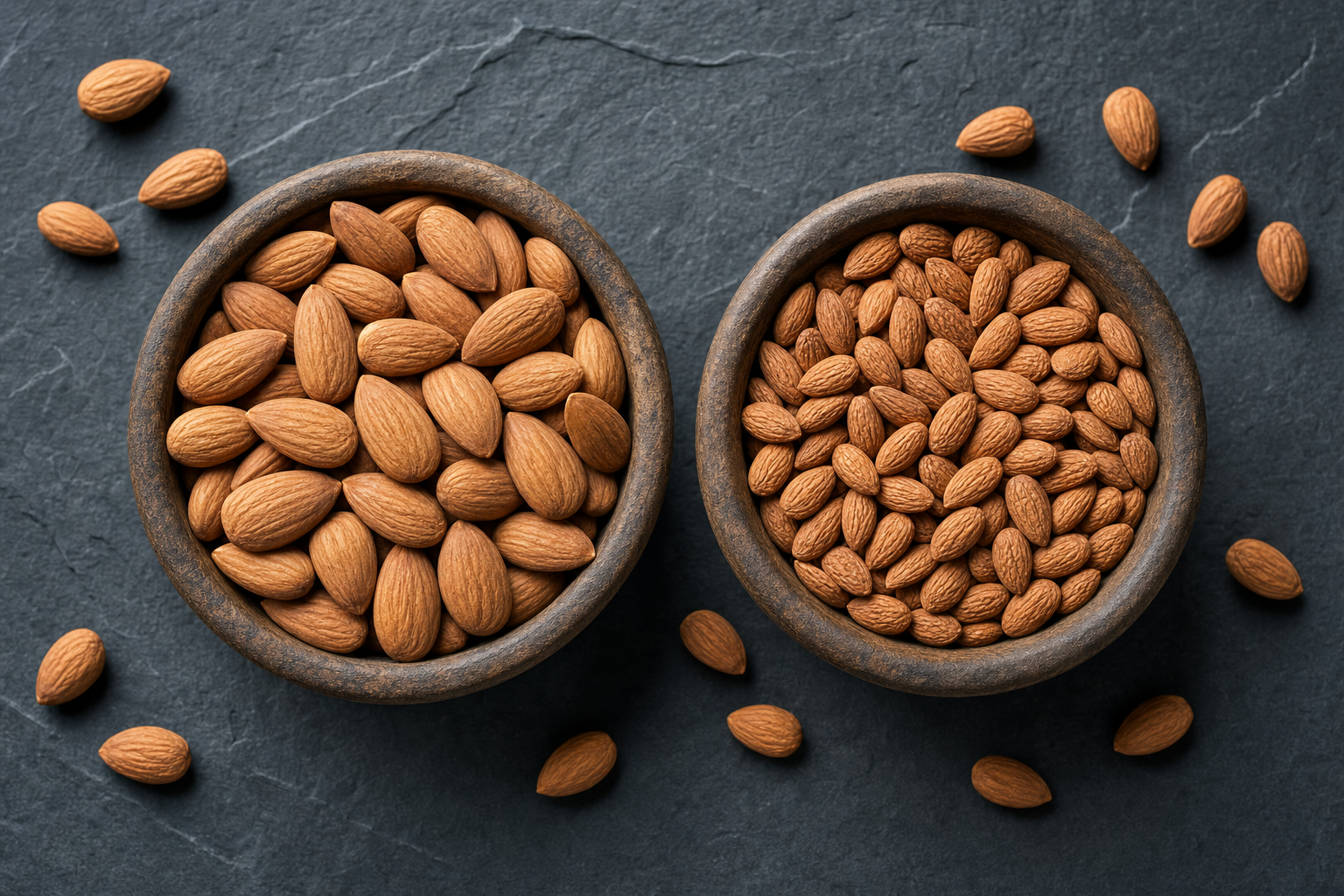
Almonds are one of the most recommended foods in both traditional Indian medicine and modern nutrition science: and yet most people buy them on autopilot, choosing by price or packet size without any consideration of variety, origin, or quality. This guide covers everything relevant: the key almond varieties available in India, how they differ in origin, flavour, and nutrition, eight evidence-supported health benefits, how to soak and eat them correctly, and what separates a premium sourcing proposition from a commodity one.
The Key Almond Varieties Available in India
Not all almonds are the same. India imports almonds from multiple origins, and the domestic Gurbandi variety from Kashmir has its own distinct character. Here is a practical comparison:
Gurbandi Almonds (Choti Giri)
Origin: Kashmir, India (also Afghanistan and parts of Pakistan) Size: Small, wrinkled, elongated Shell: Hard Flavour: Distinctly more bitter and aromatic than American varieties due to higher natural oil content and the presence of amygdalin compounds Nutritional profile: Higher in fat (healthy unsaturated fats), notably richer in amygdalin and the compounds associated with bitter almond’s traditional uses; considered superior in Ayurvedic texts Best use: Soaking and eating whole; traditional medicinal preparations; rich flavour contribution to milk and sweets
Gurbandi almonds are grown in challenging high-altitude conditions, which contributes to the concentrated flavour. They are smaller than imported varieties but arguably more complex in taste. You can find premium Gurbandi almonds from Nuts About You sourced with the rigour that heritage and certification demand.
Nonpareil Almonds
Origin: California, USA Size: Large, flat, smooth-skinned Shell: Thin Flavour: Mild, sweet, clean Nutritional profile: High in monounsaturated fats (oleic acid), vitamin E, and magnesium; among the most studied almond varieties in clinical research Best use: Snacking, almond flour, blanching, almond butter, commercial processing Market note: The dominant imported variety in India; most “California almonds” in retail are Nonpareil
Nonpareil is the industry standard for a reason: large size, clean flavour, thin skin, and reliable consistency across harvests. The name refers to the French word for “without equal”, originally a California grading term.
Independence Almonds
Origin: California, USA Size: Medium to large, more rounded than Nonpareil Shell: Medium thickness Flavour: Slightly fuller than Nonpareil, with a moderate sweetness Nutritional profile: Similar to Nonpareil, with slightly higher fat content Best use: Snacking, trail mixes, whole almond preparations Market note: A newer California variety developed in the early 2000s; less commonly available in India than Nonpareil but increasingly present in premium retail
Mamra Almonds
Origin: Afghanistan and Iran (also called Irani almonds) Size: Small, wrinkled: similar in appearance to Gurbandi Shell: Hard Flavour: Rich, oily, intensely almond-flavoured Nutritional profile: Higher fat content than California varieties; traditionally considered more nutrient-dense in Ayurvedic practice Market note: Often confused with Gurbandi in Indian markets; both share similar characteristics and traditional recommendations
Variety Comparison at a Glance
| Variety | Origin | Size | Flavour | Best Use |
|---|---|---|---|---|
| Gurbandi | Kashmir / Afghanistan | Small, wrinkled | Rich, bitter-sweet | Soaking, traditional use |
| Nonpareil | California, USA | Large, flat | Mild, clean | Snacking, baking |
| Independence | California, USA | Medium-large | Balanced, slightly sweet | Snacking, trail mixes |
| Mamra | Afghanistan / Iran | Small, wrinkled | Rich, oily | Soaking, Ayurvedic use |
8 Health Benefits of Almonds
1. Heart Health Support
Almonds are rich in monounsaturated fatty acids (primarily oleic acid) and polyunsaturated fats, along with plant sterols. Regular consumption is associated with reduced LDL cholesterol levels and improved total cholesterol ratios. A substantial body of clinical research supports almonds as a heart-healthy food, endorsed by dietary guidelines in multiple countries.
2. Blood Sugar Regulation
The combination of fat, fibre, and protein in almonds moderates the glycaemic response when eaten alongside carbohydrates. Studies suggest that eating a small quantity of almonds with a meal reduces post-meal blood glucose spikes. The magnesium content is also associated with improved insulin sensitivity.
3. Rich in Vitamin E
Almonds are among the richest food sources of alpha-tocopherol (vitamin E), an antioxidant that protects cell membranes from oxidative damage. A single 30 g serving provides approximately 35–40% of the daily recommended intake. Adequate vitamin E intake is associated with healthy skin, immune function, and reduced inflammatory markers.
4. Bone and Teeth Health
Almonds provide calcium, magnesium, and phosphorus. Three minerals essential for bone mineralisation. While dairy products are more efficient calcium sources per gram, almonds are a meaningful contributor within a plant-forward diet, particularly for lactose-intolerant individuals.
5. Weight Management
Despite being calorie-dense, almonds are consistently associated with weight maintenance rather than weight gain in dietary studies. The protein-fat-fibre combination produces strong satiety signals. Research suggests that a significant portion of the fat in almonds is not fully absorbed due to the cellular structure of the nut.
6. Brain and Nervous System Support
Almonds contain riboflavin (B2) and L-carnitine, nutrients associated with neurological health. Ayurvedic tradition has long recommended soaked almonds for memory and cognitive function: a recommendation that, while not fully established by randomised controlled trials, is supported by the vitamin E, riboflavin, and healthy fat content relevant to brain function.
7. Gut Health
Almond skins contain fibre and polyphenols that act as prebiotics, supporting the growth of beneficial gut bacteria. Studies have shown increased levels of Bifidobacterium and Lactobacillus species in participants who consumed almonds regularly. Soaking almonds does not remove this benefit; blanching (removing the skin) reduces it somewhat.
8. Skin and Hair Nutrition
The vitamin E and unsaturated fat content supports skin hydration and reduces oxidative damage to skin cells. Almond oil is a traditional ingredient in South Asian beauty practices for this reason. Dietary inclusion of almonds regularly is associated with improvements in skin texture in some small studies, though topical application remains a separate consideration.
How to Soak Almonds: The Right Method
Soaking almonds is a practice with both traditional and scientific backing. The brown skin of an almond contains tannins that inhibit nutrient absorption and can reduce digestibility. Soaking softens the skin, making it easy to remove (blanching), and activates enzymes that improve digestibility.
Method: 1. Rinse almonds under cold water. 2. Soak in room-temperature water for 8–12 hours (overnight is ideal). 3. Drain and peel if desired, the skin slips off easily after soaking. 4. Consume the same day for best texture and flavour.
Soaked almonds are softer, milder in flavour, and easier to digest. For Gurbandi and Mamra varieties, which have higher fat and compound content, soaking is particularly recommended.
How Many Almonds Per Day?
Nutritional guidelines and research consistently point to 20–30 g (roughly 15–23 almonds, depending on variety) as the daily quantity that delivers measurable benefits without contributing excessive calories. This provides approximately:
- 160–180 kcal
- 6 g protein
- 14 g fat (predominantly monounsaturated)
- 3.5 g fibre
- ~35% of daily vitamin E requirement
Eating more is not harmful but does add calories meaningfully. The “handful a day” recommendation from traditional nutrition guidance maps well to this range.
Three Ways to Eat Almonds Daily
Plain soaked and peeled: The most bioavailable preparation. Soak overnight, peel, eat in the morning. Pairs well with a glass of milk or warm water.
In smoothies and milk: Blended soaked almonds (with or without skin) add creaminess and nutrition to smoothies, golden milk, and traditional badam doodh.
As a snack with roasted makhana: Combining almonds with roasted phool makhana creates a snack with complementary nutritional profiles, the fat and protein from almonds alongside the light carbohydrate and fibre of makhana.
What Premium Sourcing Actually Means for Almonds
Most almonds in the Indian retail market are imported in bulk and repackaged under various labels. The difference between a well-sourced premium almond and a commodity product lies in:
- Harvest year traceability: Premium almonds are sold within a year of harvest, maintaining optimal fat quality and flavour. Old-stock almonds develop rancidity.
- Variety specificity: A premium brand names the variety it sells. Unlabelled “almonds” are typically commodity blends.
- Processing hygiene: FSSC 22000, US FDA registration, and HACCP compliance ensure the processing and packaging environment meets rigorous food-safety standards.
- Storage conditions: Almonds are high-fat nuts sensitive to light, heat, and oxygen. Airtight, food-grade packaging designed to exclude moisture and air is essential for shelf quality.
The Nuts About You range from Aplus Foods addresses all of these factors: named varieties, certified processing, and the quality controls of a family brand that has been working in premium foods since 1958.
FAQ
Q: Which almonds are best, Gurbandi or California (Nonpareil)? A: Both are excellent but serve different purposes. Gurbandi is richer in flavour, more complex, and better suited for soaking and traditional preparations. Nonpareil is milder, larger, and more versatile for snacking and baking. Nutritionally, Gurbandi tends to have higher fat content; California varieties are more consistent in size and mild flavour.
Q: Should almonds be eaten raw or roasted? A: Both forms deliver health benefits. Raw soaked almonds maximise digestibility and preserve heat-sensitive nutrients. Dry-roasted almonds are a convenient, satisfying snack. Deep-fried or heavily salted preparations add calories and sodium without nutritional benefit.
Q: Can children eat almonds daily? A: Yes, in age-appropriate quantities. For young children, soaked and peeled almonds are safer (the skins can be a choking concern for very young children). A few soaked almonds per day is a traditional morning practice in many Indian households for children.
Q: How do I know if almonds have gone rancid? A: Rancid almonds have a distinctly bitter, paint-like, or unpleasant smell that is different from the natural mild bitterness of raw almonds. They may also taste sharp or unpleasant. Properly stored almonds in airtight packaging should remain fresh for 12 months or more.
Q: Are almonds good for weight loss? A: Almonds are calorie-dense, but their fat-protein-fibre combination supports satiety strongly. Research consistently finds that almond eaters do not gain more weight than those who exclude them, and that almonds support weight management goals when consumed in moderate quantities as part of a balanced diet.
Explore Premium Almonds from Nuts About You
The variety you choose matters. The sourcing behind it matters more. Explore the Nuts About You almond range, including premium Gurbandi almonds, at store.aplus.food/shop/. Processed under FSSC 22000, US FDA-registered, and HACCP-certified, with heritage traceability from the Aplus Foods family since 1958. Free shipping on orders above ₹999.
Premium pulses, dry fruits and more
Shop heritage Aplus Foods products. Free shipping above ₹999. FSSC 22000 · US FDA · HACCP certified.
Browse the Shop →