What Makes Great Chakki Atta: And How Modern Milling Gets You There
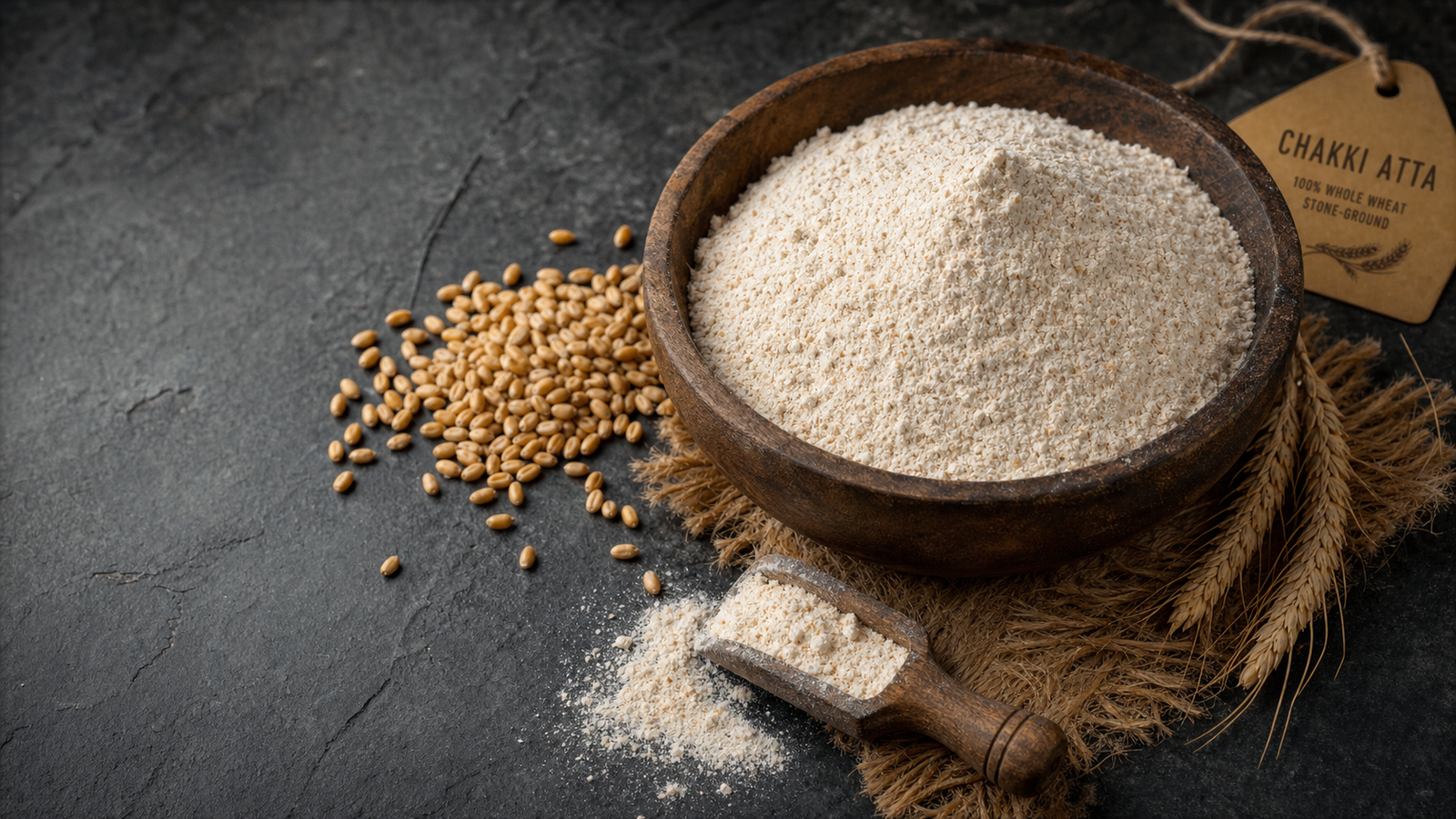
If you have ever stood in the flour aisle comparing brands, you have encountered some version of this claim: “chakki atta.” But what does chakki milling actually mean: physically, chemically, and nutritionally? How is it different from what a roller flour mill does? And does any of it matter to the roti that lands on your plate?
This guide answers all of those questions. We look at the science of milling whole wheat for atta, the difference between conventional roller-mill processes and dedicated atta technologies, how to identify a genuinely well-milled flour, the significance of wheat variety (sharbati vs lokwan), and why food-safety-certified milling, including the latest industrial atta technologies, is what separates a premium product from a commodity.
What “Chakki” Actually Means
The word chakki refers to a grinding process, historically a rotary mill in which wheat is crushed between two circular stones. In every village across Punjab, UP, and beyond, the local chakki wala was a daily fixture until the mid-twentieth century, when industrial roller flour mills began producing flour at scale.
But “chakki” today is less about a specific machine and more about a set of flour characteristics that Indian kitchens know and value:
- The whole wheat kernel, bran, germ, and endosperm, ground together, not separated
- Low-heat grinding that preserves the natural oils, flavour, and nutrition of the wheat germ
- A slightly coarse, character-filled texture that absorbs more water and produces soft, pliable rotis
- An off-white, cream-coloured flour with visible bran specks, not the brilliant white of refined flour
- A faint wheaty sweetness that signals biologically active wheat germ oils are still intact
Any milling technology that delivers these characteristics, at scale, with documented food safety, produces what Indian kitchens recognise as great chakki atta. As we will see below, modern atta-specific milling systems are now designed to reproduce exactly this flour profile while solving the hygiene and consistency problems of traditional setups.
How Roller Flour Milling Differs
A conventional roller flour mill uses hardened steel rollers, a break system followed by a reduction system, to fractionate the wheat kernel into its components: endosperm, bran, and germ. This is the technology that produces maida (refined white flour) by separating and discarding bran and germ.
When a roller flour mill produces “whole wheat atta,” the process typically involves milling the wheat to extract white flour, then recombining the separated bran fractions back into the flour stream. This reconstituted whole wheat flour is technically whole wheat by composition, but structurally and nutritionally it is different from flour where the kernel was ground intact.
Key distinctions:
| Characteristic | Genuine Chakki Atta | Reconstituted Roller-Mill Atta |
|---|---|---|
| Grinding mechanism | Whole kernel ground together at low temperature | Fast steel rollers; fractions separated then recombined |
| Heat generated | Low | Higher (friction at roller speed) |
| Bran/germ | Never separated; integrated with endosperm | Separated and later recombined |
| Wheat germ oils | Retained in flour | Partially degraded by heat; may be partially removed |
| Starch damage | Moderate (favours water absorption for soft roti) | Variable; often higher at roller speeds |
| Particle size character | Slightly varied, coarser, character-rich | Very fine, uniform |
| Flavour | Earthy, slightly sweet, complex | Cleaner but sometimes flat |
| Roti texture | Soft, pliable, slightly rustic | More uniform but can be less flavourful |
| Freshness profile | Germ oils still active — milled in small batches | Germ removed; fewer reactive fats |
Source: Journal of Food Science and Technology (PMC); industry guidance from Bühler’s Atta process documentation.
Live wheat germ oil is what marks out a real chakki atta. It is the same oil that carries the vitamin E, the healthy fats and the sweet, nutty aroma that refined flour has had stripped out of it. An atta that never turns rancid, even stored for months in warm conditions, should prompt questions about what was removed or chemically treated in the process.
The Limits of Traditional Stone Chakkis
Traditional stone chakkis, the small village mills that produced India’s atta for centuries, deliver authentic flour character, but they were not designed for the scale, hygiene standards, or batch consistency that branded food businesses require today. Their well-documented limitations include:
- Stone wear and contamination. Grinding stones must be re-dressed roughly every month; abraded stone particles and binder chemicals can find their way into the flour.
- Inconsistent particle size and ash content between batches as the stones age and the gap drifts.
- Difficult sanitation. Porous stone surfaces and open mechanisms are hard to clean to international food-safety standards.
- Low daily capacity, typically up to 10 tonnes per mill, which is incompatible with serving a national premium brand.
- No process control. The miller cannot deliberately tune water absorption, starch damage, or granulation to a target spec.
For decades, atta producers serving urban markets had a difficult choice: either accept stone chakki limitations on hygiene and consistency, or use a roller mill and lose the authentic chakki flour character. The technology gap has now been closed.
A Third Path: Modern Atta-Specific Milling
The most significant development in atta technology in recent years is a category of dedicated, high-compression milling systems engineered specifically to produce chakki-character flour at industrial scale, with full food-safety certification.
The leading example is Bühler’s PesaMill™, the name comes from the Sanskrit word pesa, meaning “grinding.” Bühler, the 165-year-old Swiss food-process engineering company that supplies milling technology to many of the world’s largest food businesses, designed the PesaMill explicitly to deliver an atta whose “quality, texture and taste are identical to atta produced on traditional chakki stone mills,” as documented in Bühler engineering case studies.
What this technology delivers, and why it represents the future of premium atta production:
- Identical chakki character. Bran, germ, and endosperm are processed together; the resulting flour has the colour, texture, water absorption, and roti behaviour of traditional chakki flour.
- Industrial food safety. Closed, easy-to-sanitise design with no stone contact, no binder chemicals, and no stone-particle contamination, meeting hygiene standards required for FSSC 22000 and US FDA certification.
- Process control. Starch damage, water absorption, and granulation can be deliberately adjusted to a target spec, meaning every batch matches the last.
- Yield and energy efficiency. A single PesaMill can replace the throughput of up to 20 traditional stone chakkis, with reduced energy consumption per tonne and higher overall yield.
- No monthly stone re-dressing. Lower maintenance burden means fewer process interruptions and more consistent output.
The takeaway: a well-engineered modern atta mill is not a compromise between chakki quality and industrial hygiene, it is the resolution of that trade-off. The roti on your plate tastes like chakki atta because, by every measurable flour parameter that matters, it is.
How to Identify Great Chakki-Style Atta
Whatever the mill technology behind it, a genuinely well-made chakki-character atta has identifiable characteristics:
1. Colour
Real chakki-character atta is off-white to warm cream with visible brownish specks from bran particles distributed through the flour. It is not brilliant white. A flour that is very white and very fine is more likely a heavily refined roller-mill product than a true whole-wheat atta.
2. Texture
Chakki atta has a slightly coarser, more varied feel between the fingers than a refined roller-milled product. Rub a pinch between your fingertips: you should feel the slightly rough character of bran particles integrated into the flour.
3. Smell
Fresh chakki atta has a distinct, faintly sweet, wheaty aroma, the intact wheat germ oils contribute a characteristic nuttiness. Atta that smells flat, neutral, or slightly stale is likely old stock or has had active components removed.
4. The Sift Test
If you pass a quality chakki atta through a fine sieve, it will not cleanly separate into white flour and bran. Because everything was ground together, the bran particles are finely integrated. The inseparability of bran is documented as a classical marker in the IJCMAS research on sharbati and lokwan wheat varieties.
5. Ash Content
Ash content, the mineral residue remaining after combustion, is a technical measure of bran content in flour. Higher ash content signals more bran and germ in the flour, which correlates with higher mineral and fibre content. The IJCMAS study found chakki atta ash content at approximately 1.43% for sharbati wheat, compared to 0.565% for a refined roller-milled equivalent from the same wheat, meaning chakki-character atta retains significantly more mineral content.
Wheat Varieties: Sharbati, Lokwan, and Punjab Wheat
Not all wheat produces equal atta. The grain variety matters enormously, and Indian food culture has its own well-developed vocabulary for this.
Sharbati Wheat
Grown primarily in Madhya Pradesh, particularly the Sehore and Vidisha districts, sharbati is considered India’s premium bread wheat. The name itself is evocative (sharbat = sweet drink), referring to the slight natural sweetness of flour made from this variety. Sharbati wheat is characterised by: - Larger, more translucent grains (vitreous kernel) - Higher moisture content than lokwan - Brighter, lighter coloured flour - Higher gluten content, 8–10% wet basis in chakki atta, giving rotis better elasticity and a softer texture - Naturally sweeter flavour in chapatis
The IJCMAS comparative study found that sharbati wheat gave better results on moisture content, ash content, colour, and taste compared to lokwan, making it the preferred variety for quality atta production.
Lokwan Wheat
Also a Madhya Pradesh variety, lokwan is more compact, slightly smaller-grained, and has a lower moisture content than sharbati. It is harder (higher hectolitre mass at 78 kg/hl) and produces a slightly denser flour with a higher proportion of bran relative to endosperm. Lokwan atta is often considered healthier by nutritionists who value higher bran content, though the roti texture is less soft than sharbati. Many premium atta blends combine both varieties to balance nutrition and texture.
Punjab Wheat
Punjab, the heartland of Indian wheat cultivation, produces high-quality hard wheat varieties well-suited to atta milling. The proximity of Nawanshahr and the Doaba belt to these wheat-growing regions gives millers here distinct procurement advantages in terms of freshness and grain quality.
Why Colour and Ash Content Matter
Two technical indicators separate premium chakki atta from commodity flour:
Colour: The natural creamy-off-white colour of whole wheat flour is a marker of authenticity. Fluorescent whitening agents (historically used in some milling operations) are a red flag. The FSSAI regulations prohibit the addition of unapproved whitening agents in atta, but enforcement at the commodity level varies. Buying from FSSC 22000-certified mills eliminates this concern.
Ash content: Higher ash = more bran and germ retained = more fibre, minerals, and phytonutrients. This is a measurement used by quality millers to verify the degree of whole-grain retention in their flour. Premium atta producers should be able to confirm ash content per batch, a level of process control that is the norm in modern atta-specific mills and rare in traditional stone chakkis.
Storage and Rancidity: The Enemy of Good Atta
The wheat germ oil in chakki atta is nutritionally valuable, but also prone to oxidative rancidity, particularly in hot and humid Indian climates. Here is how to protect your atta:
- Buy in smaller quantities more frequently rather than stocking a 10 kg bag for months, the fibre-and-fat richness that makes chakki atta superior also makes it more perishable
- Store in an airtight, food-grade container away from direct heat and sunlight; the inside of a cabinet away from the stove is ideal
- Refrigeration in a sealed container significantly extends freshness in summer months, the cold retards oxidation of wheat germ oils
- Signs of rancidity: a distinctly sour, musty, or “off” smell; grey discolouration; a slightly bitter taste in rotis.
- Shelf life: well-stored chakki atta is best used within 6 months of milling. Heavily refined commercial atta can sit longer, but it has already sacrificed some nutritional character for that longevity
Why FSSC 22000 Milling Matters for Quality Consistency
Food safety certification is not just a regulatory box to tick, it is the system that ensures the same quality parameters are maintained batch after batch. For atta, the specific concerns are:
- Mycotoxin control: wheat stored improperly develops aflatoxins and other mycotoxins from mould. FSSC 22000 requires documented HACCP plans that identify and control this risk at incoming grain, storage, and milling stages.
- Adulterant prevention: chalk, lime, and other whitening agents have been detected in market-grade atta. FSSC 22000 audits include testing for adulterants.
- Pest contamination: grain storage is a high-risk area for rodent and insect contamination. Certified facilities must document and verify pest management protocols.
- Consistency of milling parameters: grinding gap, throughput, and temperature must be controlled to produce consistent particle size and ash content across batches, something modern atta-specific mills are engineered to deliver precisely.
When a brand carries FSSC 22000, US FDA, and HACCP certifications simultaneously, it signals that the quality system meets not just Indian standards (FSSAI) but international food safety benchmarks.
Key Takeaways
- Chakki atta is defined by a set of flour characteristics, whole kernel ground together at low heat, bran and germ retained, soft and pliable roti texture, rather than by any single piece of equipment.
- Conventional roller-milled “whole wheat atta” typically involves separating and recombining bran fractions, the reconstitution process is nutritionally and structurally different from a true integrated grind.
- The most significant recent development in atta technology is a generation of dedicated, high-compression mills, most notably Bühler’s PesaMill, engineered to deliver authentic chakki flour character at industrial scale, with food-safety standards traditional stone mills cannot meet.
- Genuine chakki atta has an off-white to cream colour with visible bran specks, a slightly coarser texture, and a faint wheaty sweetness.
- Ash content is a reliable technical marker: chakki atta ash (~1.43%) is significantly higher than refined roller-milled atta (~0.56%), confirming greater bran retention.
- Sharbati wheat (MP) produces soft, sweet, light-coloured atta; lokwan produces denser, more bran-rich flour, premium blends use both.
- Store chakki atta in airtight containers away from heat; refrigerate in summer; use within 6 months for best flavour and nutrition.
- FSSC 22000 and HACCP-certified milling ensures consistent quality, mycotoxin control, and freedom from adulterants across every batch.
Shop at Aplus Foods
Aplus Foods mills its atta in Nawanshahr, Punjab, in the heart of India’s finest wheat-growing country, with food-safety certifications that include FSSC 22000, US FDA, HACCP, and FSSAI. We are committed to the next generation of chakki milling technology: equipment engineered to deliver authentic chakki flour character with the hygiene, batch consistency, and process control that an international premium brand demands. When a roti matters, and it always does, start with flour that is made right. Visit us at store.aplus.food.
Premium pulses, dry fruits and more
Shop heritage Aplus Foods products. Free shipping above ₹999. FSSC 22000 · US FDA · HACCP certified.
Browse the Shop →