Chia Seeds: A Complete Guide for the Indian Kitchen
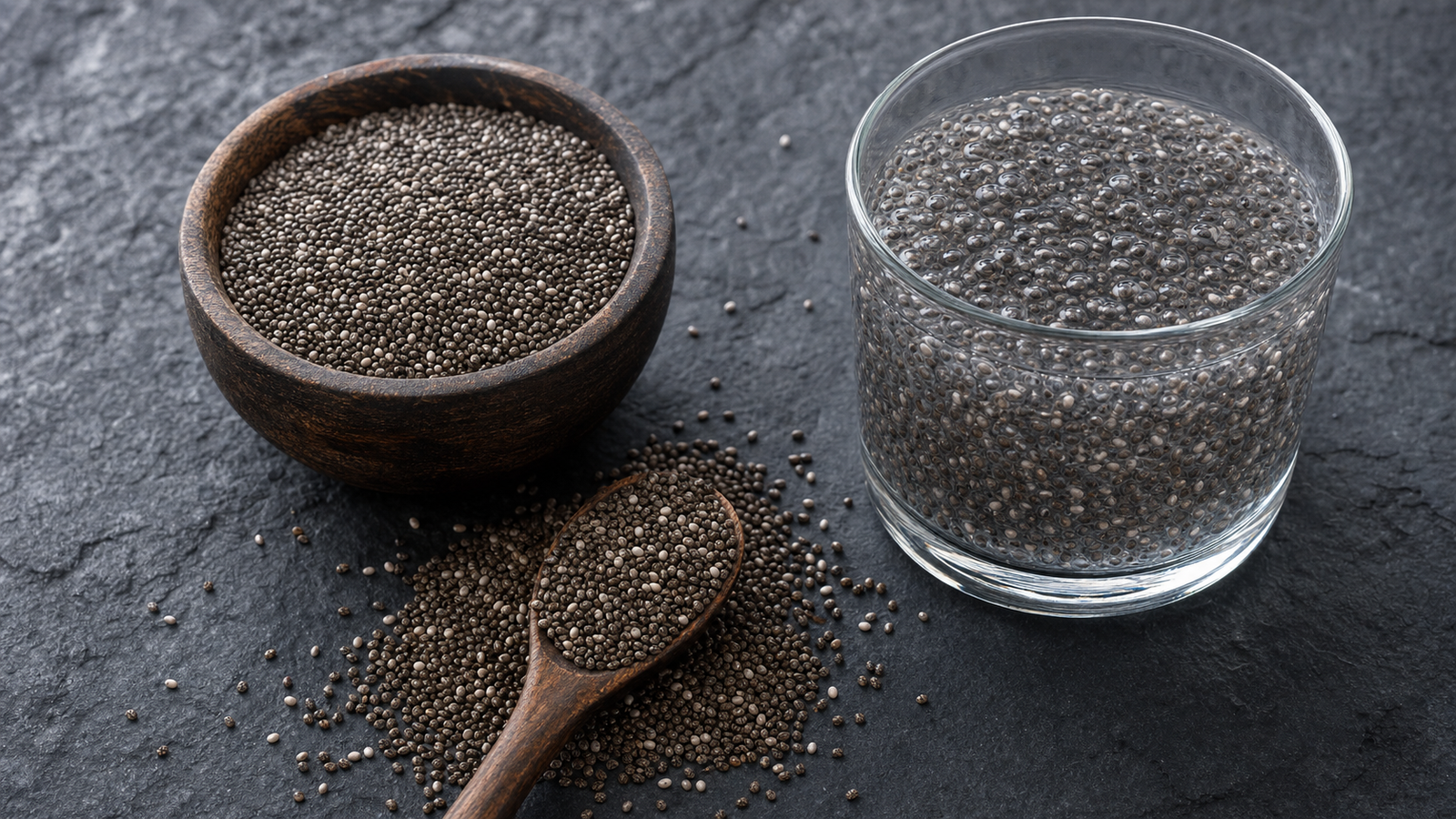
In Indian nutrition conversations of the past decade, few ingredients have generated as much genuine interest, and as much confusion, as chia seeds. Are they the same as sabja? How much should you eat? Do they really contain omega-3 fatty acids? Is there anyone who should be careful?
This guide answers all of it: the science behind chia’s nutrition profile, practical ways to incorporate this seed into an Indian daily diet, the important sabja vs chia clarification, evidence-based daily intake guidance, and who should exercise caution. All grounded in credible sources from NIH, USDA, Mayo Clinic, and peer-reviewed research.
What Are Chia Seeds? Origin and Botanical Identity
Chia (Salvia hispanica L.) is a flowering plant of the mint family (Lamiaceae), native to central and southern Mexico and Guatemala. The seeds, tiny oval grains no larger than a sesame seed, were a primary food crop for the Aztec and Mayan civilisations. The name “chia” is derived from the Nahuatl word chian, meaning “oily,” a reference to the seeds’ exceptionally high fat content.
Modern nutritional science has validated what pre-Columbian cultures intuitively understood: chia seeds are among the most nutrient-dense small seeds in the world, packing omega-3 fatty acids, fibre, protein, and a remarkable array of micronutrients into a tiny package. Today, Salvia hispanica is cultivated across Mexico, Bolivia, Argentina, and increasingly in parts of Australia and India.
Sabja vs Chia: Setting the Record Straight
This is India’s most persistent chia-related confusion, and it deserves a clear answer.
Sabja seeds (also called tukmaria or basil seeds) come from Ocimum basilicum, the sweet basil plant. Chia seeds come from Salvia hispanica, a completely different plant.
| Feature | Sabja Seeds | Chia Seeds |
|---|---|---|
| Plant | Ocimum basilicum (sweet basil) | Salvia hispanica (chia) |
| Colour | Uniformly black | Grey, black, or white speckled |
| Shape | More rounded/oval | More oval, slightly longer |
| Soaking requirement | Must be soaked before eating, swell within 5–10 minutes | Can be eaten raw or soaked; soak time is 30–60 minutes |
| Swelling speed | Very fast, forms gel within minutes | Slower, full gel forms over 30+ minutes |
| Primary use in India | Falooda, sharbat, cooling drinks | Puddings, smoothies, water, baking |
| Omega-3 content | Minimal | High (ALA) |
| Origin | South/Southeast Asia | Mexico/Central America |
Both are nutritious in their own right. Sabja is particularly valued in Ayurveda for its cooling properties and is a traditional Indian ingredient; chia is a newer import to the Indian kitchen. They cannot be substituted for each other, and using them interchangeably is botanically and culinarily incorrect.
Nutrition Profile of Chia Seeds
Per 28g (approximately 2.5 tablespoons) of dried chia seeds, per Mayo Clinic Health System and USDA FoodData Central:
| Nutrient | Per 28g serving |
|---|---|
| Calories | ~138 kcal |
| Protein | 4.7 g |
| Total Fat | 9 g (of which ~8g heart-healthy fats) |
| Omega-3 ALA | ~5 g |
| Total Carbohydrates | 12 g |
| Dietary Fibre | 9.75–10 g |
| Calcium | ~179 mg (~18% DV) |
| Iron | ~2 mg |
| Magnesium | ~95 mg |
| Phosphorus | ~244 mg |
| Zinc | ~1 mg |
Per 100g, chia seeds contain 34–40g of dietary fibre, equivalent to nearly 100% of the recommended daily adult intake, making them one of the most fibre-rich foods available, per the Journal of Food Science and Technology (PMC).
The Omega-3 Story
Chia seeds are celebrated as the richest known plant-based source of Alpha-Linolenic Acid (ALA), the plant form of omega-3 fatty acid. ALA must be obtained from diet (it cannot be synthesised by the body) and is the precursor to the longer-chain omega-3s EPA and DHA. The conversion from ALA to EPA/DHA in the human body is modest, so chia seeds complement but do not replace oily fish or algae-based omega-3 supplements for those targeting EPA/DHA specifically. That said, ALA itself has significant anti-inflammatory value and is linked to cardiovascular protection, per Food Science & Nutrition (PMC).
For vegetarians, vegans, and the large section of India’s population that limits or avoids fish, chia seeds represent an important and accessible omega-3 source.
Health Benefits: What the Evidence Says
1. Cardiovascular Support
Chia’s omega-3 ALA content, combined with its soluble fibre, creates a dual mechanism for heart health: ALA reduces systemic inflammation and supports healthy lipid profiles, while soluble fibre binds to LDL cholesterol and aids its excretion. A comprehensive review in Food Science & Nutrition (PMC) found that chia seed supplementation can decrease triglycerides, reduce insulin resistance, and increase HDL (“good”) cholesterol.
2. Blood Sugar Regulation
The gel-forming property of chia seeds, produced when the seeds’ soluble fibre absorbs water and forms mucilage, slows the rate at which carbohydrates are digested and glucose enters the bloodstream. This blunted glycaemic response makes chia seeds particularly relevant for India, where type 2 diabetes and pre-diabetes rates are among the world’s highest.
3. Digestive Health and Satiety
The insoluble fibre in chia seeds bulks stool, promotes regularity, and feeds beneficial gut bacteria. The soluble fibre, once gelled, extends the feeling of fullness. A mechanism that several studies have linked to reduced total caloric intake when chia is added to meals. A 2.5-tablespoon serving provides approximately 35% of the daily fibre recommendation for women, per Healthline.
4. Bone Health
Chia seeds are a notable plant-based source of calcium, phosphorus, and magnesium, the three key minerals in bone matrix formation. A 28g serving provides approximately 18% of the Daily Value for calcium, which is meaningful for vegetarians, vegans, or individuals with lactose intolerance who may have lower dairy intake.
5. Antioxidant Activity
Chia seeds contain chlorogenic acid, caffeic acid, myricetin, quercetin, and kaempferol: a suite of polyphenolic antioxidants linked to anti-ageing, liver protection, and anticancer properties in preclinical research, per the Food Science & Nutrition review (PMC).
How Much Per Day? Guidance for Indian Consumers
The commonly recommended serving size is 1–2 tablespoons (approximately 14–28g) per day. Research studies have used portions ranging from 7g to 50g per day; the sweet spot for benefit without digestive discomfort for most adults appears to be in the 15–25g range.
The National Nutrition Monitoring Bureau under NIN, Hyderabad includes seeds and nuts in its dietary guidelines as part of a balanced Indian diet, with an emphasis on variety and moderation. Start with one teaspoon daily and build up gradually, particularly if your current fibre intake is low, sudden high-fibre additions can cause temporary bloating and gas.
Critical reminder: always consume chia seeds with adequate water or soaked in liquid. Dry chia seeds in the throat can expand and cause choking or oesophageal discomfort, as noted by Verywell Health.
5 Indian-Friendly Ways to Use Chia Seeds
1. Chia Water (Chia Paani)
The simplest entry point: soak 1 tablespoon of chia seeds in a full glass of water for 30 minutes. Add a squeeze of lime, a pinch of black salt (kala namak), and a few mint leaves. This is a hydrating, fibre-rich morning or mid-morning drink, a modern counterpart to traditional Indian seed drinks.
2. Chia Pudding with Jaggery and Mango
Mix 3 tablespoons of chia seeds into 250ml of full-fat or plant-based milk. Add 1 teaspoon of powdered jaggery (gur) for natural sweetness, avoid refined sugar for a cleaner nutritional profile. Refrigerate overnight. In the morning, top with diced alphonso mango or seasonal fruit. The jaggery provides trace iron and minerals that refined sugar cannot. This is an excellent pre-workout or post-workout breakfast.
3. Sprinkle on Dahi and Oats
The easiest daily habit: 1 teaspoon of whole chia seeds stirred into plain dahi (yoghurt) or a bowl of oats. No soaking necessary for this application, the seeds absorb moisture from the dahi during the few minutes it takes to eat. This adds omega-3s and fibre to an already-nutritious breakfast.
4. Chia in Smoothies and Lassi
Add 1–2 teaspoons of pre-soaked chia to a fruit smoothie or thinned lassi. The seeds blend into the drink and add body, fibre, and omega-3s without substantially altering flavour. Mango-chia lassi, thick mango pulp, curd, a little water, soaked chia, and a pinch of cardamom, is a genuinely excellent summer drink.
5. Chia Egg Substitute in Baking
Mix 1 tablespoon of chia seeds with 3 tablespoons of water and wait 10–15 minutes until a gel forms. This “chia egg” can substitute one egg in baking: useful for eggless cakes, muffins, and pancakes. It adds binding and moisture without altering flavour significantly.
Who Should Be Careful with Chia Seeds?
Chia seeds are safe for the vast majority of healthy adults. However, certain groups should exercise caution:
Chronic Kidney Disease (CKD)
Chia seeds contain 244mg of phosphorus and 106mg of potassium per 2-tablespoon serving. Patients with CKD who must restrict phosphorus intake (typically to 800–1,000mg/day) should note that one serving represents approximately 24–30% of that limit. Consult a renal dietitian before regular use, per the National Kidney Foundation.
History of Oxalate Kidney Stones
Chia seeds are high in oxalate. Those with a documented history of calcium oxalate kidney stones should eat chia seeds alongside calcium-rich foods, which binds oxalate in the gut and reduces absorption. Discuss with your doctor or dietitian, per Verywell Health.
Blood Pressure Medications and Blood Thinners
The omega-3 ALA in chia has mild blood-thinning properties. Those on anticoagulant medications (warfarin, aspirin therapy) or blood pressure medications should consult their physician before consuming large daily quantities.
Dysphagia (Difficulty Swallowing)
Dry chia seeds can expand rapidly in the oesophagus if swallowed without adequate liquid. Anyone with dysphagia or a history of oesophageal narrowing should always pre-soak chia seeds.
Storage and Freshness
- Store chia seeds in an airtight glass or BPA-free container away from light and heat
- Unlike many seeds, chia is naturally high in antioxidants that protect its fats from oxidation, giving it a longer shelf life than flaxseed
- Properly stored whole chia seeds remain fresh for 18–24 months at room temperature
- Refrigeration is not required but extends quality in very humid climates
- Do not store near strong-smelling spices; seeds absorb ambient odours
Key Takeaways
- Chia (Salvia hispanica) and sabja (Ocimum basilicum) are completely different plants, not interchangeable in nutrition or culinary application.
- Per 28g serving, chia seeds provide ~5g omega-3 ALA, ~10g fibre, ~5g protein, and 18% daily calcium, making them one of the most nutrient-dense seeds available.
- Clinical evidence supports chia’s role in cardiovascular health, blood sugar regulation, and digestive function via its gel-forming soluble fibre.
- The recommended daily intake is 1–2 tablespoons; start low and increase gradually to avoid digestive discomfort.
- Always consume with sufficient water or pre-soaked in liquid, never dry.
- Those with CKD, oxalate kidney stones, or who take blood thinners should consult a healthcare professional before regular use.
- Chia seeds integrate effortlessly into Indian food habits: chia water, jaggery pudding, dahi topping, lassi, and baking.
Shop at Aplus Foods
Healthy House, the clean-label functional foods brand under the Aplus Foods family (Nawanshahr, Punjab, in food since 1958), brings you premium chia seeds sourced and processed with full traceability. Every batch is handled in FSSC 22000, US FDA, HACCP, and FSSAI-certified facilities, so the omega-3s and fibre you read about on this page are what actually reach your kitchen, not diminished by poor handling. Explore Healthy House chia seeds and our full range of functional seeds and superfoods at store.aplus.food.
Premium pulses, dry fruits and more
Shop heritage Aplus Foods products. Free shipping above ₹999. FSSC 22000 · US FDA · HACCP certified.
Browse the Shop →