Jeera (Cumin Seeds): A Complete Guide to Benefits, Types, and Buying Right
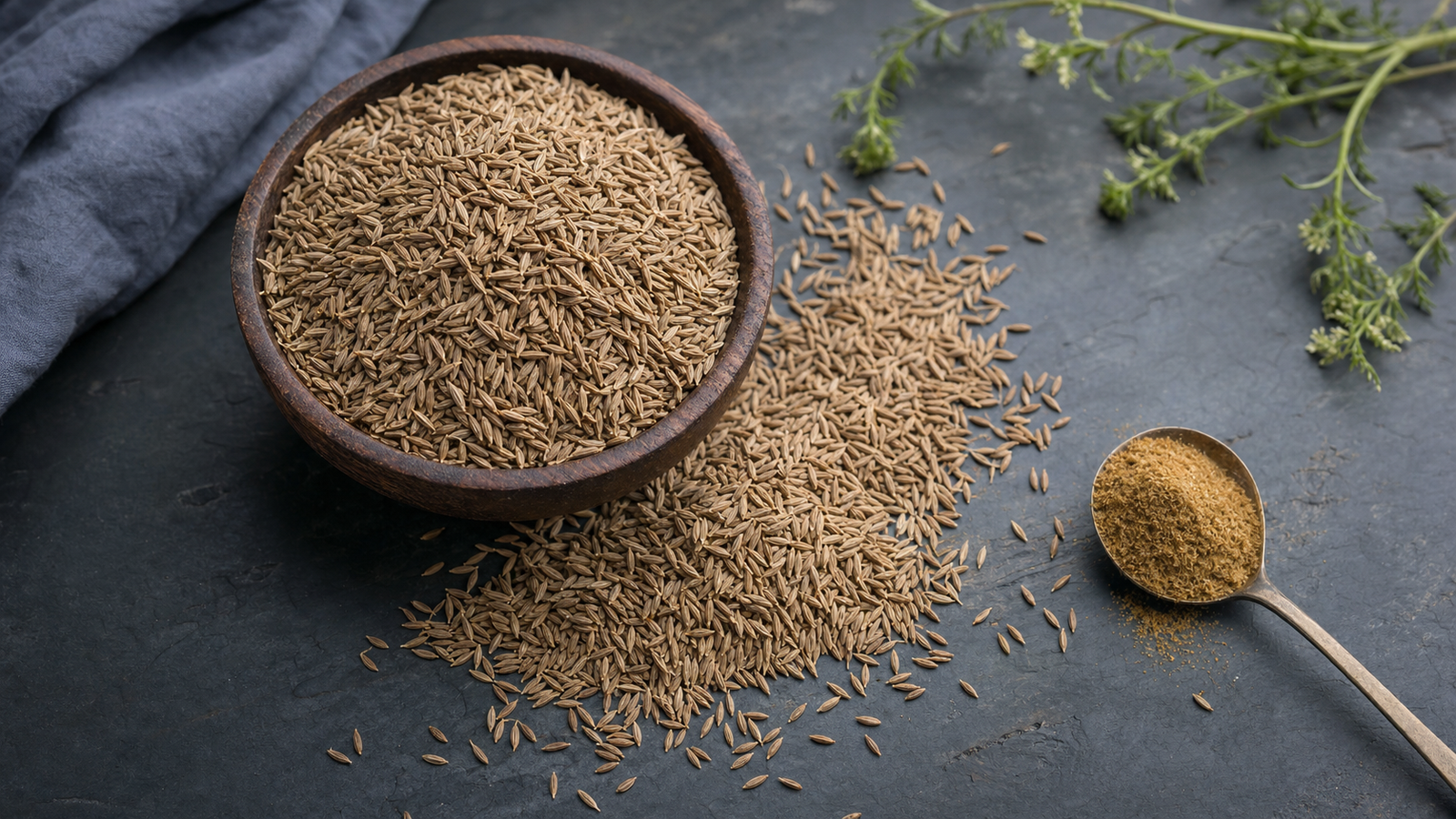
Ask any seasoned Indian cook what single spice they would never run out of, and the answer is almost always jeera. That gentle sizzle when whole cumin seeds hit hot ghee, the blooming of that distinctly earthy, warm aroma, is the sound of Indian cooking coming alive. Yet for all its familiarity on the kitchen shelf, jeera is wildly underappreciated as a nutritional powerhouse. Modern science is steadily catching up with what generations of Indian grandmothers already knew.
This guide covers everything: the difference between Indian jeera and shahi jeera, what the nutrition data actually says, how to buy quality cumin in an era of adulterated spices, how to store it, and five traditional uses that have earned jeera its reputation as India’s great digestive spice.
What Is Jeera? Botany and Identity
Jeera is the Hindi name for cumin, botanically Cuminum cyminum, a flowering plant of the family Apiaceae. The seeds, which are actually dried fruits, are small, slender, and ridged, with a colour ranging from pale khaki to warm amber-brown. India is both the world’s largest producer and consumer of cumin, with Rajasthan and Gujarat together accounting for the bulk of domestic supply.
Despite its unassuming size, a single tablespoon of whole cumin seeds delivers around 20% of an adult’s daily iron requirement, along with meaningful quantities of manganese, magnesium, calcium, and phosphorus, per USDA FoodData Central. The active volatile compounds, principally cuminaldehyde, thymol, and various pyrazines, are responsible for both its characteristic flavour and much of its therapeutic activity.
Indian Jeera vs Shahi Jeera (Kala Jeera): Understanding the Difference
This is one of the most persistent sources of confusion in the Indian spice aisle.
Indian Jeera (Cuminum cyminum)
- The standard cumin found in every kitchen
- Seeds are lighter in colour, around 4–6 mm long
- Bold, warm, slightly bitter aroma
- Used for tadka, jeera rice, cumin water, garam masala, chaat masala, and countless spice blends
- Botanically distinct from shahi jeera
Shahi Jeera / Kala Jeera (Carum bulbocastanum or Bunium persicum)
- Thinner, darker, more curved seeds
- The aroma is sweeter, more floral, almost caraway-like: far more delicate than common jeera
- Grows at high altitudes: Kashmir, Himachal Pradesh, and parts of Afghanistan and Iran
- Traditionally used in Kashmiri cuisine, Mughlai biryani, and select spice blends where subtlety matters
- Significantly more expensive than ordinary cumin due to limited production and altitude-grown character
It is worth noting that in some parts of India the term “kala jeera” is used loosely to refer to Nigella sativa (kalonji/black seeds), which is a different plant entirely. When shopping for shahi jeera, look for the thin, dark, slightly curved profile. Not the plump black seeds of nigella.
Nutrition Profile of Jeera
Per 100g of whole dried cumin seeds (USDA FoodData Central):
| Nutrient | Per 100g |
|---|---|
| Energy | ~375 kcal |
| Protein | 17.8 g |
| Dietary Fibre | 10.5 g |
| Total Fat | 22.3 g |
| Iron | 66.4 mg |
| Calcium | 931 mg |
| Magnesium | 366 mg |
| Manganese | 3.3 mg |
| Zinc | 4.8 mg |
Of course, jeera is used in culinary quantities, typically a teaspoon or two per meal, so the micronutrient contributions are proportionally scaled. Even so, daily use adds a meaningful cumulative load of iron, magnesium, and antioxidants to the diet. The National Institute of Nutrition (NIN), Hyderabad includes cumin in its reference food tables and recognises its role in traditional Indian diet patterns.
Jeera Benefits: What the Research Says
1. Digestive Aid, The Best-Documented Benefit
Jeera’s reputation as a digestive spice is grounded in solid physiology. Cuminaldehyde activates salivary gland secretion, initiating the digestive process from the first bite. Downstream, cumin stimulates bile secretion and pancreatic enzyme production, improving the breakdown of proteins, fats, and complex carbohydrates.
A clinical study published in the Middle East Journal of Digestive Diseases (NCBI/PMC) found that cumin extract significantly reduced all major IBS symptoms, abdominal pain, bloating, flatulence, and stool inconsistency, over a four-week treatment period, with more pronounced relief by the fourth week. A 2025 study in Bioinformation (NIH/PMC) confirmed cumin water’s efficacy in stimulating appetite and digestive enzyme activity in children.
2. Blood Sugar and Metabolic Health
Multiple studies have examined cumin’s hypoglycaemic potential. A trial published in the Iranian Red Crescent Medical Journal (NIH/PMC) found that high-dose Cuminum cyminum supplementation significantly reduced fasting plasma glucose, triglycerides, total cholesterol, and LDL cholesterol compared to placebo in overweight adults over eight weeks. The proposed mechanism involves improved insulin sensitivity at the cellular level.
3. Iron and Haemoglobin Support
Iron-deficiency anaemia affects an estimated 50–60% of women in India. Cumin is one of the richest plant sources of non-haem iron. While non-haem iron has lower bioavailability than haem iron from animal sources, pairing jeera with vitamin C-rich foods (tomatoes, lime juice in jeera paani) significantly improves absorption.
4. Antioxidant and Anti-Inflammatory Activity
The flavonoid phenolic compounds in cumin, including lutein, zeaxanthin, and carotenes, neutralise free radicals and reduce oxidative stress. These properties contribute to cumin’s traditional use in Ayurveda as a carminative, stomachic, and anti-inflammatory agent.
5. Weight Management Support
Research cited by Healthifyme found that consuming 3g of cumin powder daily over three months led to statistically significant reductions in BMI, waist circumference, and fasting glucose in overweight women, compared to a control group. The mechanism involves cumin’s effect on satiety, fat oxidation, and insulin sensitivity.
5 Traditional Uses of Jeera in the Indian Kitchen
1. Jeera Paani (Cumin Water) for Digestion
The simplest and most time-honoured remedy: dry-roast one teaspoon of jeera in a dry pan until the seeds turn one shade darker and release their fragrance. Add to 300 ml of warm water, steep for five minutes, strain, and drink, ideally after a heavy meal or first thing in the morning on an empty stomach. A squeeze of lime completes the picture and boosts iron absorption simultaneously.
2. Tadka, The Foundation of Indian Cooking
Tadka (the tempering of whole spices in hot fat) is the technique that unlocks cumin’s full aromatic potential. Heat ghee or neutral oil until shimmering; add whole jeera and wait for the characteristic sputtering and darkening, which takes about 30–45 seconds. The cuminaldehyde infuses the fat, creating a flavour base that no amount of ground cumin can replicate. This tadka forms the base of dals, sabzis, and raitas across India.
3. Jeera Rice (Zeera Rice)
India’s most elegant rice preparation is also its simplest: whole cumin seeds tempered in ghee, mixed through hot basmati. The key is toasting the seeds long enough for a nutty depth but short enough to avoid bitterness. Serve alongside dal makhani or rajma for the definitive north Indian thali experience.
4. Garam Masala and Spice Blends
Ground roasted cumin is a pillar ingredient in garam masala, chaat masala, panch phoron, and dozens of regional spice blends. The roasting transforms raw cuminaldehyde into deeper, more complex pyrazines. This is why roasted jeera powder tastes so different from raw ground cumin. For homemade chaat masala, a combination of roasted cumin, black salt, dried mango powder (amchur), and kala namak is hard to beat.
5. Ajwain-Jeera Kadha for Colds and Bloating
A traditional home remedy across Punjab and UP: combine jeera, ajwain (carom seeds), and a small piece of fresh ginger in boiling water, steep for ten minutes, add a pinch of black salt, and drink warm. This combination leverages the carminative properties of all three ingredients and has been used for generations to address seasonal cold symptoms, stomach bloating, and post-meal heaviness.
Buying Guide: Sortex-Cleaned vs Market-Grade Cumin
Not all jeera is equal. Here is what distinguishes premium from ordinary:
Whole vs Ground
Whole seeds, stored properly, retain potency for 12–18 months, which is why whole jeera is what we lead with. Ground cumin starts losing volatile compounds from the moment it is milled, so the pack date matters more than the expiry date: buy it fresh, in a quantity you will finish in a few months, and it will reach the pan close to full strength.
Sortex-Cleaned vs Market Grade
Sortex-cleaning uses optical sorting technology to remove discoloured seeds, damaged grains, stones, stalks, and foreign matter with precision that hand-sorting cannot match. Market-grade cumin frequently contains sand, grit, and split or mouldy seeds. When you buy sortex-cleaned jeera from a quality brand operating under food-safety certifications, you are paying for consistency and safety, not just aesthetics.
Adulteration Awareness
Cumin is among the most adulterated spices globally, with grass seeds (particularly Glycyrrhiza glabra and similar) used as bulking agents. Buy from brands that certify food-safety compliance at source. A quick home test: genuine jeera floats and disperses evenly in water; heavily adulterated samples often show obvious discolouration and inconsistent sizes.
Colour and Aroma
Premium whole cumin should be uniformly amber-green to dark amber, with a strong, clean, warm aroma. A musty or flat smell signals old stock or poor storage. Seeds that look uniformly dark may have been roasted commercially to mask staleness.
Storage: Keeping Jeera at Its Best
- Store whole seeds in an airtight glass or food-grade container, away from direct sunlight and heat
- Ideal storage temperature is below 25°C, the kitchen shelf above the stove is one of the worst spots
- Do not store near strong-smelling ingredients (garlic, onion); jeera is highly susceptible to odour transfer
- Shelf life: whole seeds, up to 18 months in optimal conditions; ground cumin, 3–4 months maximum before noticeable flavour loss
- Refrigeration is not necessary but extends potency in humid climates
Key Takeaways
- Jeera (Cuminum cyminum) and shahi jeera (Bunium persicum) are botanically distinct, the latter is rarer, thinner, darker, and more delicate in flavour.
- Cumin is rich in iron, magnesium, calcium, and fibre even at culinary serving sizes; the USDA reports 66mg of iron per 100g.
- Clinical research (NCBI/PMC) supports cumin extract’s efficacy in reducing IBS symptoms including pain, bloating, and irregular bowel movement.
- Cumin may improve insulin sensitivity and lipid profiles, relevant for India’s high burden of metabolic disease.
- Always buy whole, sortex-cleaned cumin seeds from a food-safety-certified brand and grind fresh for maximum potency.
- Jeera paani is among the simplest, most evidence-supported digestive tonics in Indian cuisine.
- Proper storage in airtight glass away from heat extends quality to 18 months.
Shop at Aplus Foods
At Aplus Foods, we have been rooted in the food trade since 1958: based in Nawanshahr, Punjab, where quality pulses, spices, and pantry staples have always been our craft. Our Aplus brand whole cumin seeds are sortex-cleaned, processed under FSSC 22000, US FDA, HACCP, and FSSAI certified conditions, so what reaches your kitchen is as clean and potent as the day it was harvested. Browse our full range of premium jeera, spice mixes, and pantry essentials at store.aplus.food.
Premium pulses, dry fruits and more
Shop heritage Aplus Foods products. Free shipping above ₹999. FSSC 22000 · US FDA · HACCP certified.
Browse the Shop →