Makhana Benefits: Everything You Should Know About India’s Superfood Snack
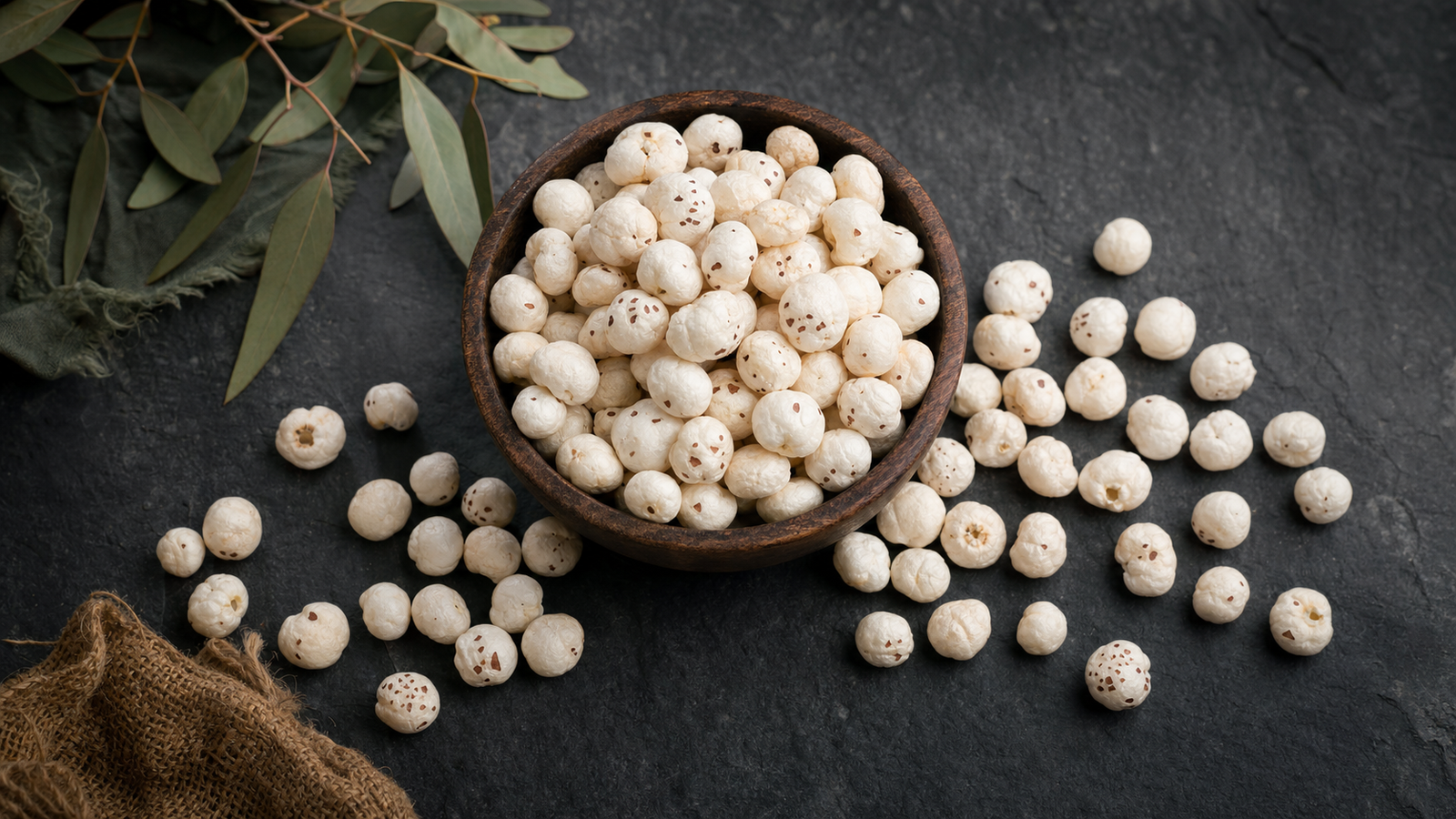
Makhana has been sitting on the shelves of Indian grocery stores and dry fruit shops for decades, mostly associated with fasting foods and prasad. But over the last few years, food scientists and nutritionists have started paying serious attention to this quietly impressive seed, and what they have found is worth knowing. Whether you eat makhana as a roasted snack, stir it into a curry, or toss it into your trail mix, here is a complete look at what phool makhana actually does for your body, how to roast it well at home, and what to watch for when choosing a quality product.
What Is Makhana? (And Why “Fox Nuts” Is a Slightly Odd Translation)
Makhana is the popped seed of Euryale ferox, a water lily plant that grows in still ponds and lakes, predominantly in the Mithila region of Bihar and parts of West Bengal and Assam. The seeds are harvested, dried, and then heated at high temperatures until they pop, similar in principle to popcorn, yielding the light, puffy white orbs sold as phool makhana (“flower lotus seed” in loose translation).
The “fox nuts” label is an English common name used mostly for export markets. In Ayurvedic tradition, makhana is called makhana or kamal beej and has been used for centuries as a restorative food: particularly recommended during illness, pregnancy, and convalescence. Modern food science has now provided the nutritional data to explain why those traditional recommendations had merit.
Nutritional Profile of Makhana
Makhana is notably light in calories relative to its volume, which makes it one of the more practical snacking choices available.
| Nutrient | Amount (per 100 g) |
|---|---|
| Calories | ~347 kcal |
| Protein | ~9–15 g |
| Carbohydrates | ~65–70 g |
| Dietary Fibre | ~7–8 g |
| Fat | ~0.1–0.5 g |
| Magnesium | ~67 mg |
| Potassium | ~500 mg |
| Phosphorus | ~200 mg |
| Calcium | ~60 mg |
The low fat content is a standout feature. Makhana is also gluten-free, making it suitable for those with coeliac disease or gluten sensitivity. It is low in sodium in its natural state, an important consideration given how much of the Indian snack market is loaded with salt and preservatives.
7 Health Benefits of Makhana
1. Supports Weight Management
The combination of high volume, relatively low calories, and meaningful protein and fibre content makes makhana a practical snack for those mindful of calorie intake. A standard 30 g handful of plain roasted makhana contains roughly 100–110 kcal and keeps you full noticeably longer than equivalent quantities of chips or biscuits. The protein and fibre work together to slow gastric emptying and moderate hunger hormones.
2. May Help Regulate Blood Sugar
Makhana has a moderate glycaemic index and a low glycaemic load per typical serving. The resistant starch in makhana is digested slowly, which may help prevent sharp post-meal blood sugar spikes. This makes it a sensible snack option for those managing diabetes, though it is not a substitute for medical management.
3. Rich in Antioxidants
Makhana contains several bioactive compounds, including kaempferol, a natural flavonoid with documented antioxidant properties. Antioxidants help neutralise free radicals, unstable molecules associated with cellular ageing and inflammatory processes. Kaempferol has been studied in the context of cardiovascular and anti-inflammatory effects, though most research remains preliminary.
4. Supports Kidney Health
In Ayurvedic medicine, makhana is classified as a tonic for the kidneys and reproductive system. Modern research suggests the alkaloids and compounds in makhana may have a mild renal-protective effect, though this area needs more clinical investigation. Its low potassium and sodium content also makes it relatively kidney-friendly compared to many other snacks.
5. Good for Bone Health
Makhana provides calcium and phosphorus, two minerals essential for maintaining bone density. While it is not a primary calcium source (dairy products remain more efficient for this purpose), regular inclusion of makhana as part of a varied diet contributes to the overall mineral load needed for bone integrity, particularly relevant for women post-menopause and elderly adults.
6. Suitable for Fasting and Special Diets
Makhana is considered “sattvic” in Ayurvedic classification and is widely consumed during Hindu fasting periods (Navratri, Ekadashi). It is naturally gluten-free, grain-free, and low-sodium. For those following specific dietary protocols, whether Jain, vegan, or gluten-free, plain makhana is one of the more versatile options available.
7. May Support Cognitive Function
Thiamine (vitamin B1) found in makhana supports the nervous system and is associated with memory and cognitive performance. Traditional Ayurvedic texts recommended makhana as a brain tonic, and while the scientific evidence on cognition specifically is limited, the B vitamin and magnesium content makes it a nutritionally sensible inclusion in a diet focused on brain health.
How to Roast Makhana at Home
Roasting transforms the texture of raw makhana from slightly chewy and dense to light, crisp, and satisfying. Here is a reliable method:
- Heat a heavy-bottomed pan (kadhai or skillet) on medium-low heat. Do not add oil yet.
- Add the makhana in a single layer. Dry-roast, stirring constantly, for 8–10 minutes until the makhana turns crisp and a light golden hue. Test by pressing one between your fingers, it should snap cleanly.
- Add a small amount of ghee (roughly half a teaspoon per 100 g) and your choice of seasoning. Toss for another 1–2 minutes.
- Remove from heat. The makhana will continue to crisp as it cools.
Seasoning ideas: A pinch of rock salt and black pepper is classic. Turmeric and ghee is a traditional combination with its own nutritional logic. For bolder flavours, try chaat masala, amchur, or a dash of dried herb mix.
Flavoured Makhana: What to Look For
The market for flavoured makhana has expanded considerably. Peri peri, chilli garlic, and mint masala variants are now widely available and make makhana genuinely competitive with conventional snack foods on flavour. The key difference between quality and convenience-tier products lies in the base ingredient and the flavouring approach.
Quality flavoured makhana starts with full, intact, properly popped makhana (not crushed, over-dried, or mixed with fillers), uses real spice blends rather than artificial flavour compounds, and controls salt levels so the seasoning enhances rather than dominates. The Nuts About You fox nuts range from Aplus Foods takes this approach: processed under FSSC 22000, US FDA-registered, and HACCP-certified facilities, with the kind of rigorous sourcing that comes from over six decades in premium food.
Portion Size: How Much Makhana Per Day?
There is no single fixed answer, but nutritionists typically suggest 30–50 g per day as a snack quantity for most adults. This gives you a meaningful protein and fibre contribution without displacing other important food groups. Makhana is nutrient-dense but not nutritionally complete, it works best as a snack component of a balanced diet, not as a meal substitute.
Common Myths About Makhana
Myth: Makhana is fattening. Reality: Plain roasted makhana is very low in fat. The calorie count per serving is considerably lower than most popular Indian snacks. It becomes calorie-dense only when heavily coated in butter, cream, or sugar.
Myth: Makhana is only for fasting. Reality: This is a cultural association, not a nutritional one. Makhana is a practical, high-nutrition food for any occasion.
Myth: All makhana products are the same. Reality: Quality varies considerably by grade (size and completeness of the pop), sourcing region, and processing hygiene. Certified, traceable sourcing matters.
FAQ
Q: Is makhana good for weight loss? A: Makhana is a low-calorie, high-fibre snack that supports satiety. Replacing higher-calorie snacks with a moderate portion of plain or lightly seasoned roasted makhana is a practical step for those managing calorie intake. It is not a weight-loss food in isolation.
Q: Can I eat makhana during pregnancy? A: Makhana has a traditional recommendation in Ayurveda for use during pregnancy. Its folate, calcium, and iron content make it a reasonable dietary addition. However, consult your gynaecologist or nutritionist for personalised guidance.
Q: What is the difference between phool makhana and lotus seeds? A: Both terms are used interchangeably in most Indian contexts, though strictly speaking, “lotus seeds” can refer to Nelumbo nucifera (the sacred lotus), while makhana comes from Euryale ferox (prickly water lily). In practice, the commercial product sold as “phool makhana” in India is the Euryale ferox variety.
Q: How should I store makhana at home? A: In an airtight container at room temperature, away from moisture and direct sunlight. Properly stored, makhana keeps for several months. If it loses crunch, a brief re-roast in a dry pan restores the texture.
Q: Is makhana gluten-free? A: Yes. Makhana is naturally gluten-free and safe for those with coeliac disease or gluten intolerance, provided it is not processed alongside gluten-containing grains. Look for certified facilities to ensure no cross-contamination.
Try Premium Makhana from Nuts About You
Not all makhana is created equal. From sourcing to seasoning, the difference between a premium product and a commodity one shows up in every bite. Explore the Nuts About You fox nuts range at store.aplus.food/shop/: part of the Aplus Foods family, carrying certifications from FSSC 22000, US FDA, and HACCP. Heritage sourcing, modern food safety, and a snack you will actually want to reach for.
Premium pulses, dry fruits and more
Shop heritage Aplus Foods products. Free shipping above ₹999. FSSC 22000 · US FDA · HACCP certified.
Browse the Shop →