Premium Jaggery Online India: A Complete Buyer’s Guide to Gur
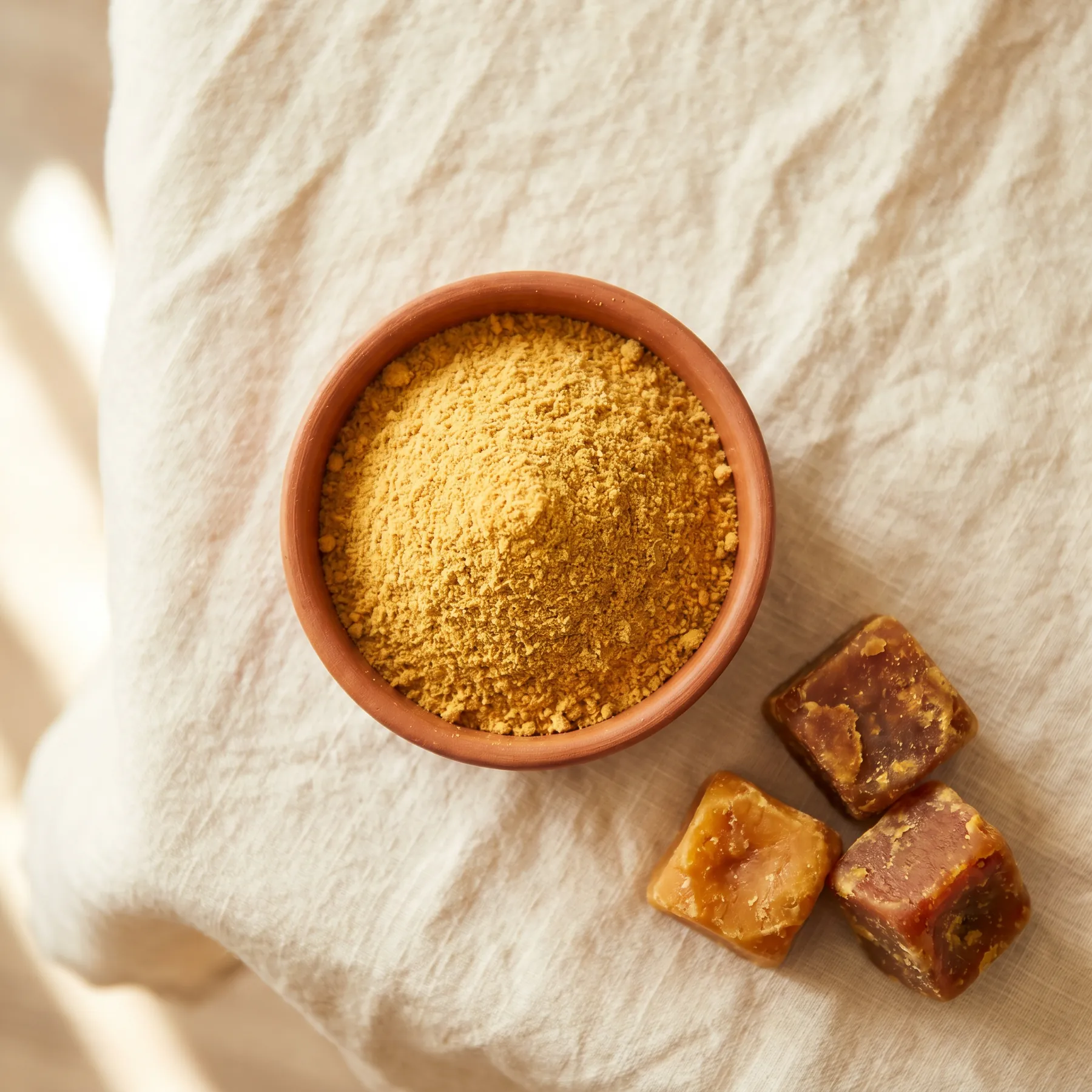
Jaggery is one of those ingredients that has been in Indian kitchens for so long that most people stopped thinking critically about it. A slab of gur with the evening chai, a piece after lunch for digestion, jaggery in the tilgul, jaggery in the pongal: it shows up across cuisines, seasons, and traditions. But in recent years, the jaggery market has changed significantly: industrially produced “jaggery” that looks and behaves nothing like traditional gur has flooded grocery shelves, and the price range now spans from commodity blocks to premium, single-origin, additive-free products. This guide gives you the context to make an informed choice.
Types of Jaggery: Not All Gur Is the Same
The word “jaggery” covers a wide category of unrefined sweeteners made from the sap or juice of sugar-producing plants. The three principal types in the Indian market are:
Sugarcane Jaggery (Ganna Gur)
The most common variety, made by boiling freshly pressed sugarcane juice and allowing it to set in moulds. The colour ranges from golden-yellow to deep brown, depending on the variety of cane, the region, and the processing temperature. Lighter jaggery is typically processed at lower temperatures and retains more micronutrients. Dark, dense jaggery often indicates longer cooking times or older sugarcane.
Sugarcane jaggery is made in every major sugar-producing state in India, Maharashtra, Uttar Pradesh, Karnataka, Tamil Nadu, Gujarat, and regional varieties differ meaningfully in flavour and texture. Kolhapur and Muzaffarnagar are two of the most recognised production regions.
Date Palm Jaggery (Khajur Gur / Nolen Gur)
Made from the sap of date palm trees, tapped during winter months (December to February). This variety is concentrated primarily in West Bengal and coastal Odisha. Nolen gur has a distinctive, complex caramel-like flavour profile, sweeter and more aromatic than sugarcane jaggery. It is seasonal, produced only in winter, and typically commands a higher price. Widely used in Bengali sweets, particularly nolen gurer sandesh and pithe.
Palm/Toddy Palm Jaggery (Tal Gur / Karuppatti)
Made from the sap of Palmyra or coconut palm trees, common in Tamil Nadu, Kerala, and parts of Andhra Pradesh. Karuppatti (black sugar) from the Palmyra palm is one of the most mineral-dense jaggery varieties available. Its flavour is deeply complex with mild smoky or molasses notes. Used extensively in South Indian traditional cooking and Ayurvedic preparations.
Jaggery vs White Sugar: The Nutritional Comparison
This comparison is worth making carefully, jaggery is not a health food in the conventional sense. Both jaggery and white sugar are high in sugars (sucrose primarily), and both should be consumed in moderate quantities. The difference lies in what accompanies that sucrose.
| Attribute | White Sugar (refined) | Jaggery (traditional) |
|---|---|---|
| Sucrose | ~99.5% | ~65–85% |
| Glycaemic Index | ~65 | ~84 (varies by type) |
| Iron | Negligible | ~11 mg per 100 g |
| Magnesium | Negligible | ~70–90 mg per 100 g |
| Potassium | Negligible | ~1050 mg per 100 g |
| Calcium | Trace | ~80 mg per 100 g |
| B Vitamins | Stripped | Small amounts retained |
| Processing | Heavily refined, bleached | Minimal, unrefined |
| Molasses | Removed | Retained |
The mineral content of traditional jaggery, particularly iron, potassium, and magnesium, is meaningfully higher than white sugar because the molasses fraction, stripped out during sugar refining, is retained in gur. For a population where micronutrient deficiencies (particularly iron) are prevalent, this matters.
That said, the glycaemic index of jaggery is not dramatically lower than refined sugar. Swapping sugar for jaggery is not a solution for diabetes management. What jaggery offers is a more complex nutritional profile alongside the sweetness, plus meaningful flavour depth that white sugar simply does not have.
How to Identify Pure Jaggery
The jaggery market has a significant adulteration problem. Common adulterations include:
- Sodium hydrosulphite (a bleaching agent): Used to produce artificially light-coloured jaggery, sometimes mislabelled as “organic” or “premium.” Genuine pale/golden jaggery achieves its colour from specific sugarcane varieties and careful processing, not chemical bleaching.
- Sugar syrup addition: Mixing refined sugar back into jaggery to reduce production costs.
- Chalk powder (calcium carbonate): Added to artificially increase weight and achieve a whiter colour.
- Industrial-grade materials in moulds: Contamination from poor-quality production equipment.
Practical checks when buying jaggery:
Colour as a guide, not a guarantee: Good sugarcane jaggery ranges from golden-amber to dark brown. Very white jaggery at an unusually low price is worth questioning. Deep brown or black is not automatically better, it may indicate over-processing.
Taste and flavour: Pure traditional jaggery has a complex, rounded sweetness with a faint molasses note. Adulterated jaggery often tastes flat or overly sweet without depth. A mild caramel or toffee note in the finish is a good indicator of quality.
Texture: Traditional jaggery should be firm enough to hold its shape but not brittle or rock-hard. It should melt cleanly when heated and not leave a chalky or gritty residue.
Dissolution: Dissolve a small piece in warm water. Pure jaggery dissolves to a clear or lightly cloudy warm amber liquid. Significant cloudiness or white sediment may indicate adulterants.
Cooking Uses of Jaggery
Jaggery’s culinary range is broader than most people use:
Everyday sweetening: Used in chai, south Indian rasam, tamarind chutney, and sambhar. The depth of flavour jaggery adds to these dishes is noticeably different from sugar.
Traditional sweets: Tilgul (sesame and jaggery), chikki (groundnut brittle), pongal, payasam, modak, and dozens of regional festival sweets depend on jaggery for their characteristic flavour.
Fermentation: Jaggery is used as a fermenting agent in traditional drinks and vinegars, providing both sweetness and the residual minerals that support fermentation.
Savoury cooking: In several regional cuisines (Gujarati, Bengali), jaggery is used as a seasoning in dal, curries, and pickles, balancing the sourness of tamarind or the heat of chillies.
Baking: Jaggery substitutes well for brown sugar in cookies, cakes, and energy bars, adding a deeper, more complex sweetness. It also produces a slightly denser, moister crumb.
Ayurvedic Uses and Traditional Recommendations
In Ayurvedic medicine, jaggery (guda) occupies an important and nuanced position. Key traditional recommendations include:
- After meals: Small portions of jaggery eaten after a meal are believed to support digestion and activate digestive enzymes. This is a practice observed in many Indian households, though the scientific evidence base is limited.
- Respiratory support: Jaggery with ginger or black pepper is a traditional preparation for cough and cold management.
- Iron supplementation: Jaggery with sesame seeds (tilgur) is a long-standing practice for supporting haemoglobin levels, particularly in women.
- Seasonal use: New jaggery (freshly made in the winter season) is considered more potent than stored jaggery in Ayurvedic texts. Old jaggery, fermented or dried, has different properties.
Ayurveda also cautions against overconsumption of jaggery, classifying it as a food that should be eaten in small quantities. This aligns with modern nutritional guidance.
When to Consume Jaggery and How Much
For general use, traditional recommendations suggest 10–15 g per day as a reasonable quantity, roughly one to two small pieces. This provides some mineral benefit without contributing excessive sugars. Jaggery consumed in larger quantities, regardless of its natural origin, contributes meaningfully to overall sugar intake.
People managing diabetes, insulin resistance, or metabolic syndrome should treat jaggery with the same caution as any other concentrated sweetener and consult their healthcare provider.
FAQ
Q: Is jaggery better than sugar for diabetics? A: Jaggery has a glycaemic index that is not substantially lower than white sugar. It is not a recommended substitute for diabetics and should be consumed with the same caution as refined sugar. Some forms of jaggery may have a slightly lower GI depending on their composition, but this is not consistent enough to be clinically relied upon.
Q: What is the difference between organic jaggery and regular jaggery? A: Organic jaggery is made from sugarcane grown without synthetic pesticides or fertilisers, certified by a recognised organic certifying body. Regular jaggery may be made from conventionally grown cane. Both can be traditional in processing method; organic certification speaks specifically to farming inputs.
Q: How should jaggery be stored? A: In an airtight container in a cool, dry place. Jaggery is hygroscopic, it absorbs moisture from the environment, which causes it to melt or become sticky. In humid climates, a sealed container in the refrigerator works well. Properly stored solid jaggery keeps for several months.
Q: Can jaggery go bad? A: Pure solid jaggery does not spoil easily but can absorb moisture and develop mould if stored in open or damp conditions. Jaggery powder is more susceptible to moisture absorption. Signs of spoilage include unusual smell, visible mould, or fermentation.
Q: Which type of jaggery is most nutritious? A: Palm and date palm jaggery (karuppatti, nolen gur) are generally considered more mineral-dense than sugarcane jaggery by traditional measures, though the nutritional content varies by production method. Darker, minimally processed sugarcane jaggery retains more minerals than lighter, heavily processed versions.
Source Jaggery with Confidence
The provenance of your jaggery matters as much as the ingredient itself. Explore the premium traditional foods range on store.aplus.food/shop/, including staples from the Aplus Foods brand: a family legacy from Nawanshahr, Punjab, operating since 1958, with FSSC 22000, US FDA, and HACCP certifications ensuring that every product meets rigorous food-safety standards. Free shipping on orders above ₹999.
Premium pulses, dry fruits and more
Shop heritage Aplus Foods products. Free shipping above ₹999. FSSC 22000 · US FDA · HACCP certified.
Browse the Shop →