Rajma Chitra: The Story Behind India’s Most Prized Speckled Kidney Bean
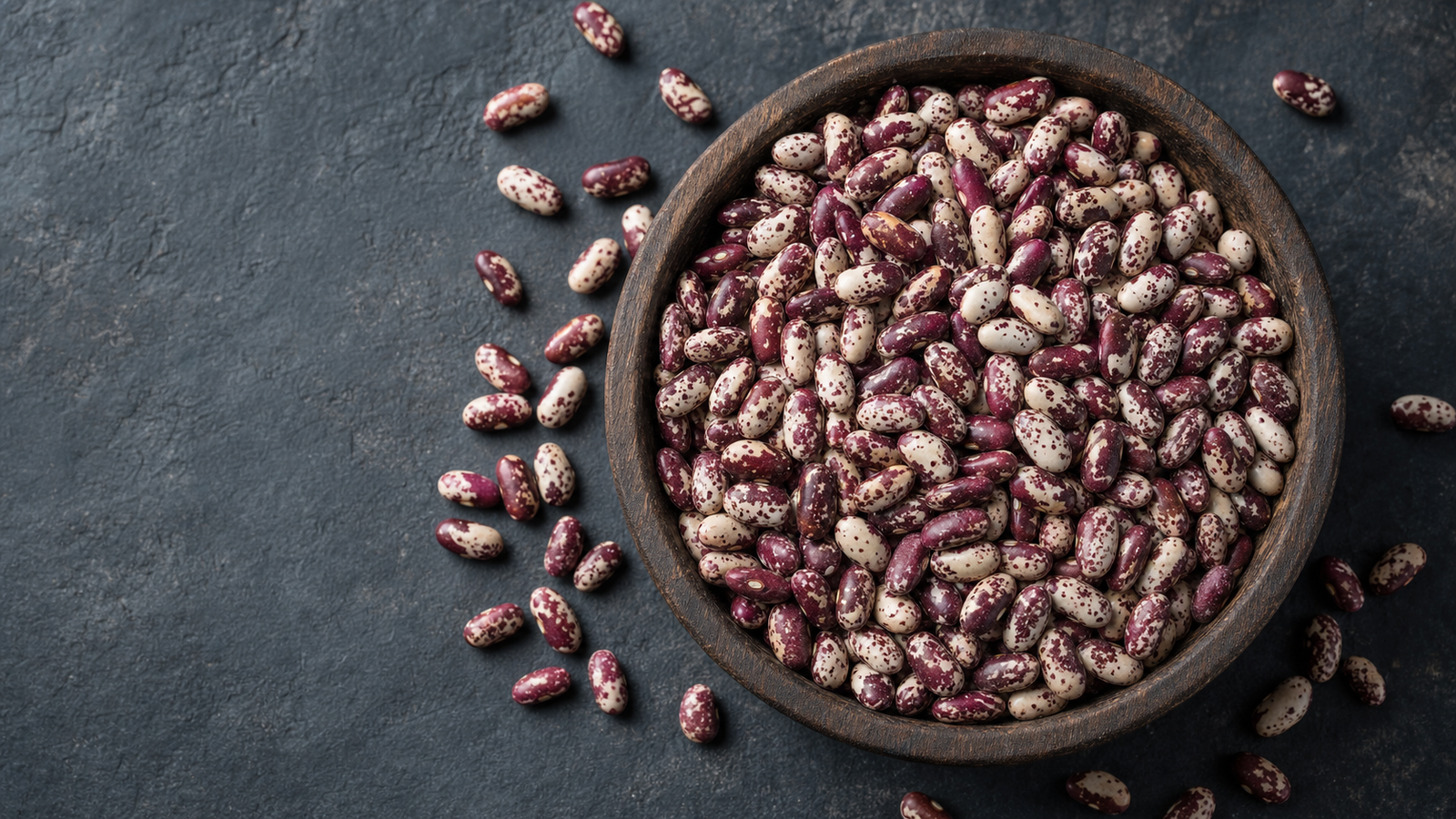
If rajma chawal is the soul food of north India, then Rajma Chitra is its most distinguished expression. Less well-known than the bold red kidney bean that dominates grocery shelves, the Chitra variety, also called chitkabra, chiti rajma, or speckled kidney bean, is a Himalayan treasure with a distinct character: smaller, creamier, faster to cook, and with a depth of flavour that the larger commercial rajma simply does not offer.
In an era of commodity food, Rajma Chitra is one of those ingredients that rewards knowing more. This guide traces its origins, unpacks what makes it nutritionally and culinarily different, walks through the ideal soaking and cooking process, and explains why sourcing matters when you buy this variety.
What Is Rajma Chitra?
Rajma Chitra belongs to the species Phaseolus vulgaris, the common bean, just like all kidney beans. What sets it apart is appearance, geography, and texture.
The seeds are notably smaller and more oval than the standard red kidney bean, with a distinctive speckled pattern: a cream or pale buff base overlaid with maroon-brown streaks and dots, as though painted with a fine brush. This mottled look is where the name chitkabra (from the Hindi word chitka, meaning spotted or speckled) originates.
From a culinary standpoint, Chitra rajma has two significant advantages over its red counterpart:
- Faster cook time, the seed coat is thinner, so it absorbs water more readily and softens earlier under heat
- Creamier, more melting texture, the cooked bean breaks down into a velvety, almost buttery consistency that makes for a richer, thicker gravy without the need for excessive oil or cream
Flavour-wise, Chitra rajma is earthier and slightly nuttier than regular red rajma, a quality attributed to the mountain terroir in which it grows.
Origins: Kashmir, Jammu, and the Harsil Valley of Uttarakhand
Rajma Chitra is a high-altitude crop. Its primary growing regions are:
Jammu & Kashmir
The valley varieties from J&K, sometimes marketed as “Kashmiri rajma”, are among the most prized. The distinctive micro-climate, cold mountain water, glacial-mineral-rich soils, and short growing season at altitudes above 1,500 metres produce beans that are smaller, more aromatic, and more nutrient-dense than plains-grown varieties, as noted by the JK Arts Foundation. J&K Chitra rajma has been featured in discussions on Geographical Indication protection for the region’s agricultural heritage.
Harsil Valley, Uttarakhand
The Harsil valley in the Bhagirathi river basin, just below Gangotri, produces a Chitra rajma with a slightly different profile. Grown at elevations of around 2,700 metres, Harsil rajma is celebrated for its intense flavour and creamy post-cooking texture, as documented by My Pahadi Dukan. The cold temperatures slow the growing cycle, concentrating sugars and nutrients. Annual production is limited, which explains why authentic Harsil rajma commands a premium.
Himachal Pradesh
Mountain districts in HP also produce Chitra-type kidney beans. The crop is often grown as a subsistence or small-farm crop, harvested in the autumn, and stored through winter.
In all these regions, the bean is deeply embedded in local food culture. A bowl of rajma chawal made from Himalayan Chitra beans on a winter afternoon is not merely a meal, it is a specific, irreplaceable experience.
Rajma Chitra vs Regular Red Rajma: A Comparison
| Feature | Rajma Chitra | Regular Red Rajma |
|---|---|---|
| Size | Smaller, more oval | Large, kidney-shaped |
| Colour | Cream/buff with maroon speckles | Deep uniform red |
| Skin thickness | Thinner | Thicker |
| Soaking time needed | 4–6 hours | 8–10 hours |
| Cook time (pressure cooker) | 15–20 minutes after soaking | 25–30 minutes after soaking |
| Cooked texture | Creamy, melting | Firm, holds shape longer |
| Flavour | Earthy, nutty, rich | Bold, slightly starchy |
| Geographic origin | Himalayan regions (J&K, Uttarakhand, HP) | Plains varieties, many imported |
The thinner seed coat of Chitra rajma also means it absorbs the masala gravy more deeply during cooking, the beans drink in the spiced tomato-onion base so that every bite carries the full flavour of the dish.
Nutrition Profile of Rajma Chitra
Kidney beans as a class are among the most nutrient-dense legumes available, and the Chitra variety is no exception. Per 100g of raw Rajma Chitra (representative values):
| Nutrient | Per 100g (raw) |
|---|---|
| Energy | ~400 kcal |
| Protein | ~20–24 g |
| Carbohydrates | ~60–64 g |
| Dietary Fibre | ~20–25 g |
| Fat | ~2.5 g |
| Iron | ~8–9 mg |
| Potassium | ~1,200–1,400 mg |
| Folate | High (important for neural tube health) |
| Magnesium | ~140–160 mg |
Sources: Two Brothers Organic Farms nutritional reference; USDA FoodData Central kidney bean data.
The high fibre content, particularly soluble fibre, slows glucose absorption, making kidney beans a low-to-moderate glycaemic index food that is appropriate for those managing blood sugar. The protein content (approximately 24g per 100g raw) makes rajma a cornerstone plant-based protein for vegetarian India, providing muscle-building amino acids alongside the carbohydrate energy.
The National Kidney Foundation notes that kidney beans are low in sodium and provide a favourable potassium-to-sodium ratio, supporting cardiovascular health. The significant folate content is relevant for women in reproductive years and for the neural tube development of foetuses in early pregnancy.
Health Benefits at a Glance
- Heart health: soluble fibre binds to LDL cholesterol and aids its elimination
- Blood sugar regulation: low glycaemic response makes it suitable for diabetics and pre-diabetics
- Gut health: insoluble fibre promotes bowel regularity and feeds beneficial gut bacteria
- Iron and energy: meaningful plant-based iron supports haemoglobin; important for India’s anaemia burden
- Protein for vegetarians: high-quality plant protein with complementary amino acids when paired with rice
How to Soak and Cook Rajma Chitra Perfectly
Soaking
Unlike regular red rajma which needs a full overnight soak (8–10 hours), Chitra rajma responds well to a 4–6 hour soak in cold water at a ratio of roughly 1:3 (beans to water). Some cooks soak overnight for extra tenderness, this works fine, though you may notice the soak water turning a faintly pink-beige as pigments leach out. Always discard the soaking water and rinse thoroughly before cooking; this removes oligosaccharides (complex sugars) that contribute to bloating.
Pressure Cooker Method (Recommended)
- Drain and rinse soaked beans
- Add to pressure cooker with fresh water (beans covered by at least 5 cm)
- Add a pinch of asafoetida (hing) and half a teaspoon of turmeric to the cooking water, both aid digestibility
- Cook for 3–4 whistles on high, then lower heat and cook for a further 8 minutes
- Let pressure release naturally, forced venting toughens the beans
The cooked beans should yield easily to gentle pressure between your fingers but hold their shape; they should not be mushy before the gravy stage.
Slow Pot Method
If you prefer a more traditional approach, a heavy-bottomed pot with a tight lid works beautifully for Chitra rajma given its thinner skin. Cover soaked beans with water and cook on low-medium heat for 60–80 minutes, skimming any foam from the surface in the first 15 minutes.
Classic Rajma Chawal: The Technique That Matters
The greatness of rajma chawal lies not in the bean alone but in the deeply cooked masala. Here is the sequence that distinguishes restaurant-quality from quick weeknight:
For the base masala: - 3 medium onions, very finely grated or puréed (not chopped, grated onions caramelise more evenly) - 4 garlic cloves + 2-inch ginger, blended to a paste - 3 medium tomatoes, blended or finely chopped - Whole spices for tadka: 1 bay leaf, 1 black cardamom, 2 cloves - Ground spices: 1 tsp jeera, 1 tsp coriander powder, ½ tsp turmeric, ½ tsp red chilli, 1 tsp garam masala added at end
The critical step: cook the onion-tomato base until the fat separates visibly from the masala, this takes 20–25 minutes on medium heat and is the non-negotiable marker of a properly developed rajma gravy. Rushing this step is the single most common reason home rajma tastes flat. Once fat separates, add the cooked beans with their cooking liquid and simmer for 20–30 minutes so the beans drink in the gravy.
Finish with a teaspoon of ghee, dried fenugreek leaves (kasuri methi crushed in the palm), and a pinch of garam masala. Serve with long-grain basmati, ideally with a thin sliver of raw onion and a wedge of lime.
Why Unpolished, Sortex-Cleaned Rajma Matters
Polishing of pulses and beans, a practice that gives them a glossy, uniform appearance, strips away part of the seed coat that contains fibre and micronutrients. Unpolished Rajma Chitra retains its natural bran layer, its authentic speckled appearance, and a slightly more complex flavour.
Beyond appearance, sortex cleaning uses optical sorting to remove foreign matter, discoloured seeds, and broken beans with a precision that manual sorting cannot guarantee. In the premium pulse market, sortex-cleaned, unpolished beans from a food-safety certified facility are the meaningful standard to demand.
Also worth noting: genuine Himalayan Rajma Chitra is a relatively small-production crop. Premium sourcing involves traceability to mountain-region farmers, not simply packaging plains-grown speckled beans under a Himalayan-sounding name. Buy from brands with transparent sourcing and food-safety certification.
Key Takeaways
- Rajma Chitra (chitkabra) is a speckled, small-sized kidney bean grown at altitude in J&K, Uttarakhand, and Himachal Pradesh, not a standard commercial variety.
- Its thinner skin means shorter soaking (4–6 hours) and cook times, and a creamier, more melting texture than red rajma.
- Chitra rajma provides approximately 20–24g protein, 20–25g fibre, and meaningful iron and folate per 100g raw, a nutritional heavyweight in the pulse world.
- Low glycaemic index makes it suitable for blood sugar management; high soluble fibre supports heart health.
- Always discard soaking water and cook with hing and turmeric for better digestibility.
- The masala base must be cooked until fat separates, this is non-negotiable for authentic rajma chawal.
- Prefer unpolished, sortex-cleaned beans from a brand with verified food-safety certifications.
Shop at Aplus Foods
Aplus Foods, established in Nawanshahr, Punjab since 1958, sources and processes premium pulses including Rajma Chitra with rigorous quality standards. Our Aplus brand beans are sortex-cleaned, unpolished where variety demands it, and processed in FSSC 22000, US FDA, HACCP, and FSSAI-certified facilities, the highest food-safety credentials available in the Indian market. Explore our full range of mountain-origin rajma varieties and premium pulses at store.aplus.food.
Premium pulses, dry fruits and more
Shop heritage Aplus Foods products. Free shipping above ₹999. FSSC 22000 · US FDA · HACCP certified.
Browse the Shop →