Unpolished Pulses: What the Label Doesn’t Always Tell You: and Why It Matters
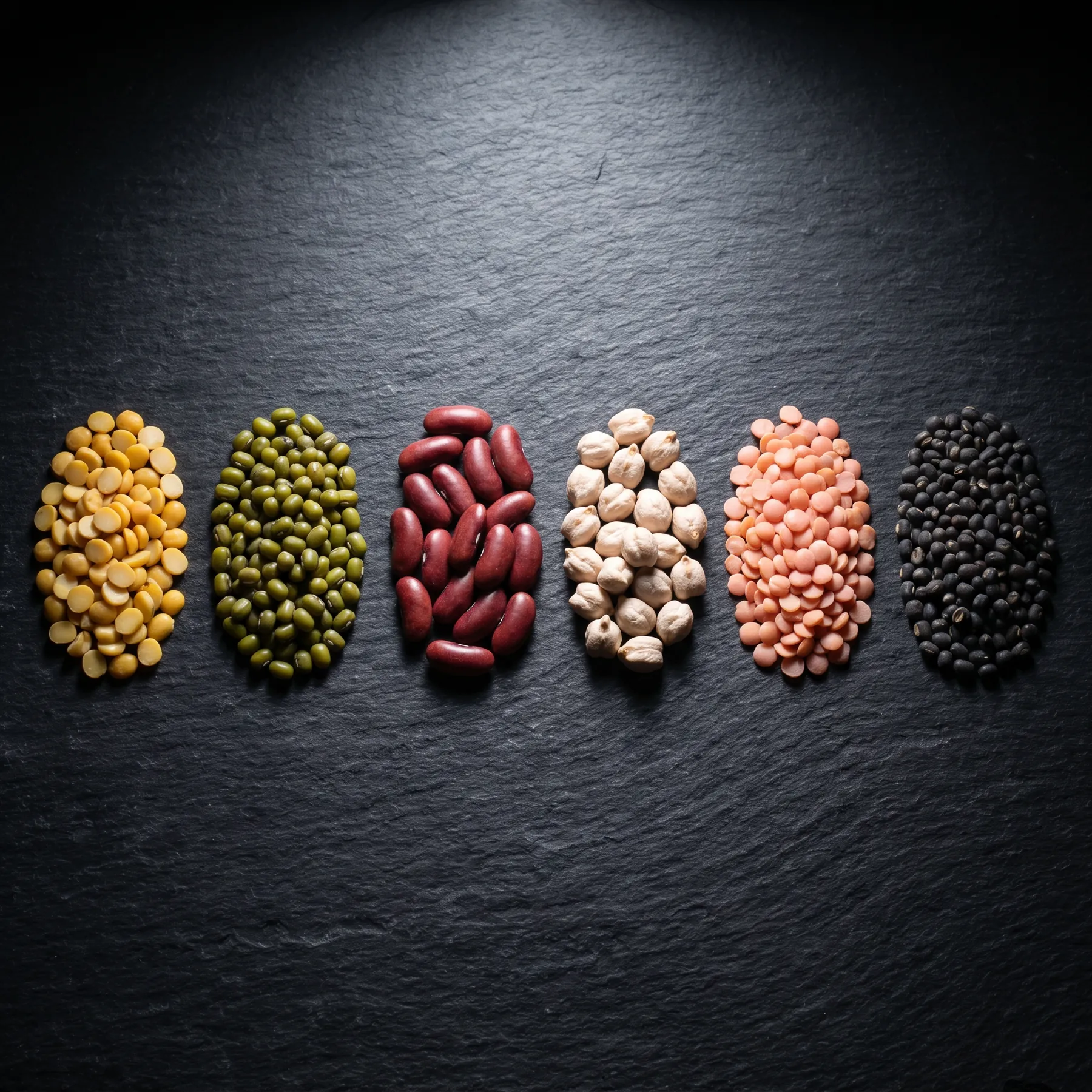
Most Indian households eat dal every day. It is one of the most consistent dietary staples across the country, spanning region, income bracket, and food tradition. Yet very few people know that the dal sitting in their pantry may have been through a polishing process that strips it of nutrients, coats it with industrial agents, and makes it look better at the cost of being genuinely worse for you. This guide explains exactly what polishing is, how to identify an unpolished dal, why the nutritional difference is significant, and what to look for in a premium product.
What Does “Unpolished” Actually Mean?
When pulses are processed after harvest, they are milled to remove the outer husk (in the case of split dals) or cleaned and graded. After basic milling, the grains are often run through a polishing process to improve their visual appeal: creating a uniform, shiny, attractive product that sells better on a shelf.
There are three primary methods used in commercial polishing:
Water polishing: Light misting with water creates surface sheen and smooths out rough surfaces.
Oil polishing: Refined oils are applied to the grain surface for gloss. Some manufacturers use food-grade oils; others do not.
Chemical/leather drum polishing: Industrial polishers use leather drums or chemical compounds to create a uniform coating. Synthetic chemicals, silicone compounds, and in some documented cases, non-food-grade agents have been identified in market surveys.
Unpolished pulses, sometimes labelled “raw,” “natural,” or “kacchi dal”, have not been through this surface treatment. They retain their natural bran layer, natural colour variation, and the full complement of nutrients that polishing removes.
Polished vs Unpolished: The Nutritional Difference
The bran layer of a pulse grain is where a significant concentration of micronutrients is found. Polishing removes part or all of this layer. Here is what that means in practice:
| Attribute | Polished Dal | Unpolished Dal |
|---|---|---|
| Dietary Fibre | Reduced (bran removed) | Higher (bran intact) |
| B Vitamins (B1, B6, Folate) | Partly stripped | Retained |
| Iron and Zinc | Lower | Higher |
| Phytonutrients | Reduced | Retained |
| Surface Residue | May contain polishing agents | Natural, clean |
| Glycaemic Impact | Higher (less fibre) | Lower (more fibre) |
| Cooking Behaviour | Often faster-cooking, mushier | More consistent texture |
| Appearance | Uniform, shiny | Natural, matte, slight variation |
The difference is not dramatic for any single meal, but across years of daily dal consumption, it adds up significantly. A family that eats dal twice a day is consuming roughly 700 portions a year, the cumulative nutritional gap between polished and unpolished dal becomes meaningful at that scale.
Health Risks of Polishing Agents
The nutritional loss from polishing is one concern. The potential chemical residue is another. Several investigations by food safety authorities, including FSSAI surveys and independent consumer research groups, have found:
- Mineral oil residues on polished grains (mineral oil is not safe for regular ingestion)
- Synthetic silicones and industrial lubricants in drum-polished products
- Artificial dyes in some cases, particularly in cheaper masoor and chana variants, used to restore colour lost during processing
These are not present in all commercially polished products, many large manufacturers use food-grade oils and clean processes, but the lack of transparent labelling means consumers have no reliable way to distinguish them by sight alone.
Certifications like FSSC 22000 (a global food safety management system standard), US FDA registration (required for export to the United States), and HACCP (Hazard Analysis and Critical Control Points) compliance provide external, audited assurance that the processing environment meets defined safety standards. When you buy from a brand carrying all three, you have significantly more assurance than from a product with only a domestic label.
How to Spot Polished Dal at Home
You do not need a laboratory test to make a reasonable assessment. These practical checks help:
The rub test: Take a small quantity of dal and rub it briskly between your palms for 30 seconds. Polished dal often leaves an oily film or unusual residue on your hands. Unpolished dal leaves your hands clean or with a faint natural starchy residue.
Colour uniformity: Polished dals often look unnaturally uniform in colour, every grain the same shade. Unpolished dal shows slight natural variation across grains, which is normal.
Surface sheen: Hold a handful under good light. Polished dal has a noticeable shine or gloss. Unpolished dal is matte, sometimes with a slightly dull appearance that some consumers initially interpret as lower quality. It is not.
Water test: Rinse a small batch of dal under cold water. If the water turns cloudy or takes on a yellow or oily tinge quickly, it may indicate surface residue. Water draining from well-sourced unpolished dal runs relatively clear after a rinse or two.
Cooking result: Polished dal often cooks to a mushier consistency and loses its shape more readily. Unpolished dal holds its form better and produces a cleaner, fuller flavour.
Why This Matters for Indian Families
The pulse is the primary protein source for a large proportion of Indian vegetarian households. Unlike meat or dairy, where consumers have developed a degree of quality discernment, the dal market is largely opaque. Most consumers buy on price and appearance, both of which polishing directly manipulates.
Children, pregnant women, and elderly adults, groups with higher micronutrient needs, are particularly affected by the nutritional gap between polished and unpolished dal. If the primary protein and iron source in a child’s diet is consistently delivering less than its nutritional potential, that is a meaningful concern.
The choice of unpolished dal is not about being precious about food. It is about getting what the ingredient is supposed to deliver. You can shop unpolished options including Aplus Masoor Dal and Aplus Masoor Whole from the Healthy House range, a label built around this exact principle.
Common Unpolished Pulses: A Reference List
The following pulses are widely available in unpolished form in India:
- Masoor dal (red lentils, whole and split): Most commonly polished to create the bright orange colour associated with the category. Unpolished versions are earthy red-brown.
- Moong dal (green gram, whole and split): Unpolished whole moong retains its green skin; split moong is naturally pale yellow.
- Chana dal (split chickpea): Unpolished chana is golden-yellow with natural variation; polished versions are more intensely bright.
- Urad dal (black gram, whole and split): Whole urad with intact black skin is naturally unpolished; split white urad varies more widely in processing.
- Toor/Arhar dal (pigeon pea): One of the most heavily oil-polished dals in the market. The classic commercial toor dal is coated in edible oil to prevent clumping and improve shelf appeal; unpolished versions require the label to specify.
- Kabuli chana (white chickpeas): Bleaching and polishing are common for visual uniformity.
- Rajma (kidney beans): Less commonly polished, but sorting and treatment vary.
The Premium Angle: Why Quality Sourcing Costs More
Unpolished pulses take more care to produce. Without the surface treatment that polishing provides, natural variation is visible, which means more rigorous sorting is needed to deliver a consistent, appealing product. Moisture control during storage is more demanding because the bran layer is hygroscopic (absorbs moisture from the environment). Shelf life management requires better packaging.
All of this adds to the cost. A premium unpolished dal will not be the cheapest option on the shelf. But the price difference between ordinary polished dal and a certified unpolished product from a reputable brand is modest when spread across daily consumption, and the nutritional and safety differential is real.
FAQ
Q: Is unpolished dal better for digestion? A: The higher fibre content in unpolished dal supports gut motility and feeds beneficial gut bacteria. For most people, this is a digestive benefit. Those with inflammatory bowel conditions should consult a doctor, as high-fibre foods are not universally appropriate for all conditions.
Q: Does unpolished dal take longer to cook? A: Slightly, in some cases. Whole unpolished dals (sabut) benefit from soaking before cooking, which reduces cooking time. Split unpolished dals cook in comparable time to their polished equivalents once the soaking step is applied.
Q: How do I know if a brand is genuinely unpolished? A: Look for explicit labelling (“unpolished,” “no polishing,” “natural”), credible certifications (FSSC 22000, HACCP), and a direct-to-consumer sourcing model with transparent processing claims. Third-party certifications are more reliable than self-declaration.
Q: Can polished dal harm you? A: Consuming food-grade polished dal occasionally is unlikely to cause harm. The concern is with long-term daily consumption of dals polished with non-food-grade agents, which may introduce chemical residues, and the consistent nutritional deficit from stripped bran. The risk is cumulative, not acute.
Q: Are organic and unpolished the same thing? A: No. Organic certification relates to farming practices (no synthetic pesticides or fertilisers). Unpolished refers to post-harvest processing. A dal can be organic and polished, or unpolished and conventionally grown. For the most comprehensive quality assurance, look for products that address both.
Choose Your Dal Wisely
The dal you eat every day deserves the same scrutiny you would apply to any important purchase. Explore the full range of unpolished pulses and staples at the Healthy House collection on store.aplus.food/shop/: processed with FSSC 22000, US FDA, and HACCP certifications, sourced from quality-first origins, and backed by the Aplus Foods family legacy that goes back to 1958. Free shipping on orders above ₹999.
Premium pulses, dry fruits and more
Shop heritage Aplus Foods products. Free shipping above ₹999. FSSC 22000 · US FDA · HACCP certified.
Browse the Shop →