The Best Masoor Dal Brand in India: An Honest Buyer’s Guide
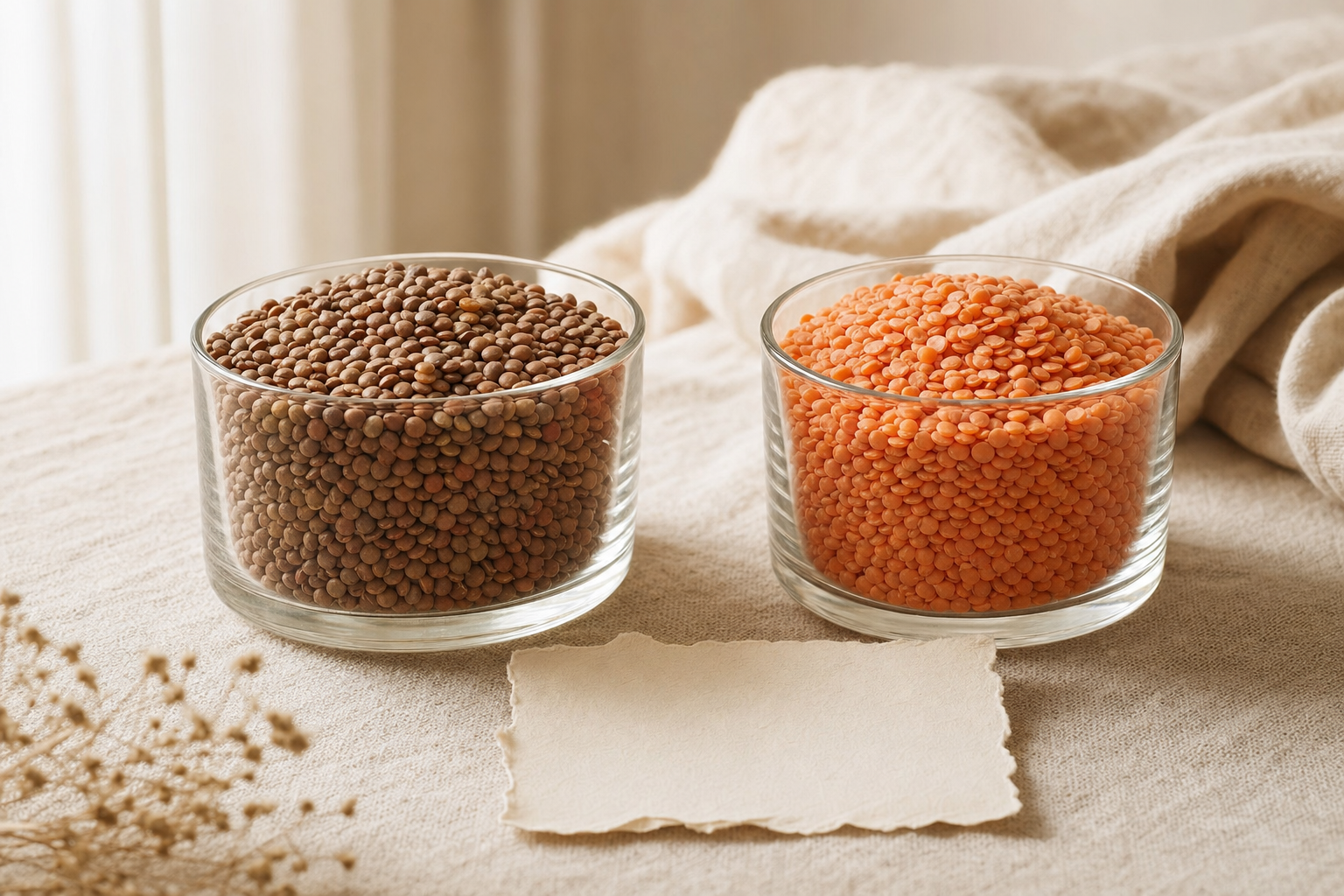
"Best masoor dal brand" is one of the most searched pulse queries in India, and it’s also one of the least useful ones, because most of the results are affiliate rankings that don’t say a word about how the dal was actually milled. This piece is not a ranking. It is a checklist you can use in a supermarket aisle to tell an honest packet from a marketing packet, regardless of the label on the front.
What "best" should actually mean
When you strip out branding, the "best" masoor dal is the one that scores highest on five things that a good miller controls, and a bad miller doesn’t:
- Unpolished, honestly. Not "no artificial polishing", actually unpolished, matte and slightly dusty to touch.
- Audited food-safety system. FSSAI is the entry ticket. FSSC 22000, US FDA registration, HACCP certification is what tells you the mill runs a real system.
- Traceable origin. The pack tells you which state (or country) the pulse came from: Bihar, MP, Rajasthan, or Canadian import.
- Pack date, not just expiry. Pulse quality drops on a knowable curve after milling. If a brand hides the pack date, it’s usually because it’s old.
- Both sabut and dhuli available. Serious pulse brands stock both. Brands that only carry the split are usually just buying finished dal from a wholesaler.
The unpolished test: done in the store, before you buy
If the packet is transparent, hold it under the store light. Honest masoor dal is a matte coral pink. Polished masoor dal is a bright, glossy orange, the shine is unnatural for a pulse. If you can, ask to open a packet at the counter (small brands and premium counters will let you). Rub two grains between your thumb and forefinger. Honest dal leaves nothing. Polished dal leaves a faint waxy film or a smear of colour.
At home, before you cook: rinse a cup in a bowl of water. Honest masoor makes the water slightly cloudy. Polished masoor turns it pink-orange within seconds. Some polishing agents (leather-buffed oil, water-talc) are legal-but-frowned-upon. Some (mineral oil) are explicitly banned. You cannot tell which one it is at home. What you can tell is that it has been done.
What FSSAI alone doesn’t tell you
Every registered food business in India has an FSSAI licence number. It is not a quality mark, it’s a licence to operate. The number is on the packet because it is legally required. The actual quality signals are the ones that a company has to spend money to earn:
- FSSC 22000, a globally recognised food safety management system audit. Recertified annually. Requires documented HACCP plans, prerequisite programmes, and management review.
- US FDA registration: the facility is registered to export to the United States and complies with FSMA rules on preventive controls, traceability, and foreign supplier verification.
- HACCP, a hazard analysis system for every step of the process. If a brand can point to a HACCP-certified facility, it means they’ve thought about what can go wrong at every stage of milling, and how they’d catch it.
Look for these on the packet or on the brand’s website. Not the badges on a landing page, the certificate numbers.
Sabut vs dhuli, why a serious brand carries both
Masoor comes in two forms in the market:
- Sabut masoor, whole, husk-on. Small brown-black seeds. Cooks in about 30 minutes. Nutrient profile intact.
- Dhuli masoor, split, husk removed. Bright pink-orange. Cooks in 15 minutes. Slightly lower fibre, easier on the gut.
Both come from the same crop. If a brand only carries dhuli, they’re usually buying finished dal from a trader and repackaging it. Brands that mill their own pulse carry both, because the same clean sabut lot they buy is what they process into dhuli. This is a small but reliable signal that you’re buying from a miller, not a repacker.
Package integrity, the boring stuff that matters
Three checks on the packet itself:
- Multi-layer pouch, not single-layer LDPE. Pulses absorb moisture fast. A cheap single-layer plastic packet will let humidity in within weeks. Look for foil-lined or metallised pouches.
- Batch code and pack date printed, not stickered. A printed date is a date the miller stands behind. A stickered date is a date the wholesaler chose.
- Weight tolerance stated. Legit brands say "1 kg net weight" and hit it. Cheap brands say "1 kg" and the packet weighs 950 g.
Where price fits in
Masoor is one of the cheapest pulses in India by nature: the crop grows fast, yields well, and imports fill any domestic gap. Retail prices for regular polished masoor sit around ₹90–110/kg. Genuinely unpolished, mill-direct, audit-certified masoor sits around ₹150–200/kg. That’s a real premium of roughly 40–70% and it’s honest. If a "premium" brand is charging you ₹350/kg for masoor dal, something is being priced on brand equity, not on the pulse.
Equally: if a brand is claiming FSSC 22000, US FDA, unpolished, mill-direct, and pricing at ₹95/kg, one of those claims is not true. The certifications alone add to the cost base.
Where Aplus Foods fits on this checklist
We’re a Nawanshahr, Punjab-based food house that has been in milling since 1958. Our masoor dal, under the Aplus brand, is milled from Indian sabut masoor lots (primarily Bihar and MP), dehusked and split without any polishing agent, and shipped from an FSSC 22000 certified, US FDA registered, HACCP audited facility. We carry both sabut masoor (Aplus Masoor Whole Small Black) and dhuli masoor (Aplus Masoor Dal Small Red) because they come from the same clean lots. Pack date is printed, not stickered. Net weight is on the pouch.
The honest position: we aren’t the cheapest masoor on the shelf. We are the most transparent about how it was milled. If the checklist above matters to you, that trade-off is the point of the brand.
The short buyer’s checklist
- Matte, not glossy → unpolished
- FSSC 22000 / US FDA / HACCP → real food-safety system
- Both sabut and dhuli → milled, not repacked
- Printed pack date → miller stands behind it
- Origin stated → traceable
- Price at 40–70% premium over unbranded → honest math
Any brand that passes all six is a good masoor dal. Any brand that passes fewer than four should be treated with polite suspicion, no matter how big the ad budget.
Related reading
Premium pulses, dry fruits and more
Unpolished pulses, honestly graded dry fruits, and single-source spices, milled and packed in Nawanshahr, Punjab. FSSC 22000, US FDA and HACCP certified.
Browse the Shop →