Global Shipping Routes and Bottlenecks: What They Mean for Food Trade
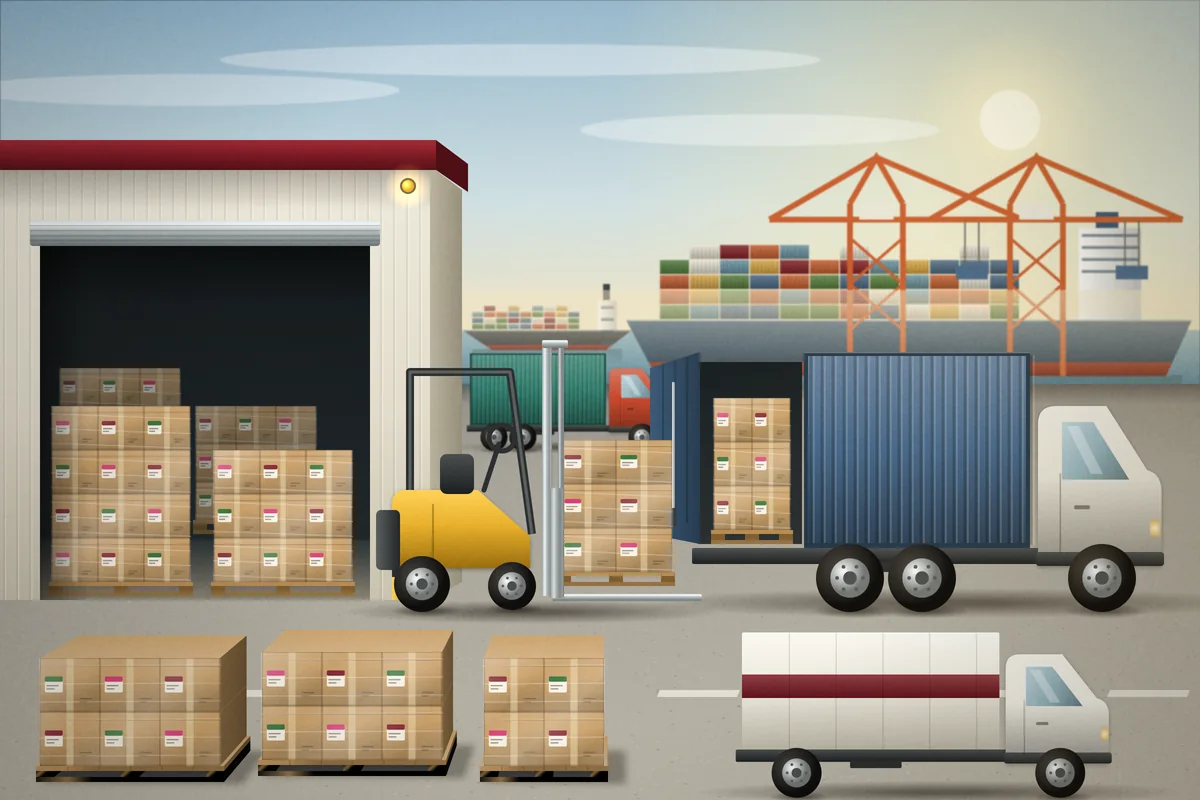
Most food crosses at least one narrow stretch of water on its way to your plate. A sack of almonds from California, raw cashews from East Africa, a container of dal bound for the Gulf: each one is routed through a handful of straits and canals that the whole world shares. When one of them closes, the effect shows up in freight bills within days and on shop shelves within weeks. Here is a plain guide to those chokepoints, what has happened to them since 2023, and what it means for anyone who buys or sells food across borders.
The handful of passages that carry world trade
- The Strait of Hormuz. The only sea entrance to the Gulf: the UAE, Saudi Arabia’s eastern coast, Qatar, Kuwait, Bahrain and Iraq. For India it is the route to some of its largest food export markets.
- Bab el-Mandeb and the Suez Canal. The Red Sea route between Asia and Europe, and between India and the Mediterranean.
- The Cape of Good Hope. The long way round Africa, used when the Red Sea is unsafe.
- The Strait of Malacca. Between Malaysia and Indonesia, the main link between the Indian Ocean and East Asia.
- The Panama Canal. The shortcut between the Atlantic and the Pacific, important for trade between the Americas and Asia.
Ships can sail around most of these, but every detour adds distance, fuel, days and insurance. Those costs end up in the price of what is in the container.
The Red Sea: two years on the long way round
After attacks on merchant ships in the Red Sea from late 2023, most large container lines stopped using the Suez Canal and sent ships around southern Africa. Container ship transits of Suez fell from 583 in October 2023 to 120 in November 2025. Going via the Cape adds more than 3,000 nautical miles and roughly ten days of sailing between Asia and northern Europe, and ties up a large share of the world’s container fleet just to keep schedules running.
Lines have been moving back gradually in 2026. Weekly container capacity deployed on Red Sea routes reached about 467,000 TEU in October 2026, roughly double the end-August level but still around half of what it was before the crisis, according to Xeneta data. Reliability has not recovered: Xeneta reports that only 27% of container ships arrived on time worldwide in the third quarter of 2026.
Hormuz: the 2026 shock closest to home
The largest disruption of 2026 began with the US and Israeli strikes on Iran on 28 February. Shipping through the Strait of Hormuz all but stopped: daily transits fell from about 120 to 4 between early February and 7 March, according to UNCTAD data cited by the Research and Information System for Developing Countries (RIS) in its May 2026 policy brief.
For Indian food trade, the brief is direct. Gulf countries account for around 15% of India’s total trade, and about 36% of India’s rice exports go to West Asia. Exporters faced extra charges of US$3,000 to US$5,000 per container, marine insurers withdrew war-risk cover in early March, and perishable shipments suffered heavy losses. Carriers rerouted Gulf cargo through ports outside the strait: Maersk, for example, has moved Upper Gulf cargo via Salalah in Oman and Khor Fakkan in the UAE, with the last leg by road.
By November 2026 traffic through the strait had partly resumed but was still well below pre-war levels, and incidents near the strait were still being reported. Anyone shipping to or from the Gulf should check the current status with their carrier before every booking.
Panama and Malacca: quieter, not risk-free
The Panama Canal depends on rainfall to fill the lakes its locks draw from. During the drought of 2023–24, the canal authority cut the number of daily transits, and industry analysts warn that low water levels could bring restrictions again. It is a reminder that weather and shipping are linked, a theme we explore in our piece on how weather moves commodity prices.
The Strait of Malacca has stayed open throughout, but it is one of the busiest waterways in the world, and congestion there or at the large transhipment ports around it can still delay cargo between India and East Asia.
What a disruption does to a food shipment
- Freight goes up. Longer routes burn more fuel and need more ships for the same weekly service. Spot rates react first; contract rates follow.
- Surcharges appear. Emergency, war-risk and congestion surcharges are added on top of the base rate, sometimes at short notice.
- Insurance changes. War-risk cover can become expensive, restricted or unavailable for certain waters.
- Transit times stretch and become less predictable. For food, time matters: longer journeys mean more days at sea in changing temperature and humidity, which is why packing and moisture control matter as much as the route. Our food safety guide explains how we handle that side.
- Ports bunch up. When ships arrive in waves instead of on schedule, berths, yards and trucks run short at the receiving end.
The pressure does not last forever. Xeneta expects global container spot rates to fall by about 30% in 2027 from their third-quarter 2026 level, because a large number of new ships is arriving while demand grows more slowly. A reopened route or a wave of new capacity can push rates down as quickly as a crisis pushed them up.
Practical steps for buyers and sellers of food
- Book earlier and confirm the routing. Ask which way the vessel will go and how many transhipments are planned.
- Read the surcharges, not just the rate. Ask for an all-in quote and check how long it is valid.
- Agree the Incoterm clearly. Under FOB the buyer carries the freight and its surprises; under CIF or CFR the seller does. Know which one you have signed.
- Check insurance for the actual route, including war-risk cover where relevant.
- Allow for longer lead times on seasonal and festive orders.
- Keep paperwork ready. Certificates and documents that are correct the first time stop a delayed ship from turning into a delayed clearance as well.
Where Aplus Foods fits in
Our packs go to modern retail, quick commerce and e-commerce across India, and as container loads to the Middle East, Europe, Africa, Canada, the USA and Australia. Raw materials come in from several continents. Our subsidiary in Dubai, Aplus Foods L.L.C FZ, keeps us close to buyers across the Gulf. None of that makes us immune to a closed strait. It does mean we watch these routes closely, and we talk to our trade partners early when they change. If you buy from us for export, the contact page is the place to start a conversation about timing and routing.
Related reading
This article is for general information only. It is not trade, legal or insurance advice. Shipping conditions change quickly; figures are as reported by the linked sources on the dates shown.
From our range
Our dry fruits and nuts



Product images are for illustration only; the actual product and packaging may vary.
Premium pulses, dry fruits and more
Unpolished pulses, honestly graded dry fruits, and single-source spices, milled and packed in Nawanshahr, Punjab. FSSC 22000, US FDA and HACCP certified.
Browse the Shop →