Food Safety and Hygiene: How Our Standards Work, Step by Step

A packet of dal looks simple. Behind it sits a long list of things that must not be in it: stones, metal, insects, mould, residues, and anything that should never have touched it. Food safety is the work of keeping that list empty, every batch, without relying on luck. This guide explains what the hazards are for dry staples, what each of the standards we work under actually asks for, and how they show up on our lines.
What can go wrong with dry staples
Pulses, dry fruits, spices, flours and millets are low-moisture foods, which makes them stable. They are not risk-free. Food safety systems sort the risks into three kinds.
- Physical hazards. Stones, mud balls, glass, metal fragments, wood, string and other foreign matter that can come in with a farm crop or be picked up in handling.
- Chemical hazards. Pesticide residues from the field; naturally occurring toxins such as aflatoxins, produced by moulds on nuts, spices and grains stored damp; and contamination from lubricants, cleaning agents or packaging that is not food-grade. Allergens belong here too: peanuts, tree nuts and other allergens must not reach products that do not declare them.
- Biological hazards. Bacteria, moulds, insects and their eggs, and pests such as rodents and birds. Low moisture slows microbes down, but it does not remove them, and flours and spices are eaten in ways that make hygiene essential.
Every standard below is, in the end, a disciplined way of finding these hazards, controlling them, and proving that the control works.
The standards, and what each one actually requires
FSSAI: the law of the land
In India, food businesses operate under the Food Safety and Standards Act, 2006, administered by the Food Safety and Standards Authority of India. A manufacturer must hold an FSSAI licence and follow its general hygiene and sanitation requirements: clean premises and equipment, safe water, pest control, personal hygiene, and proper storage. FSSAI regulations also set the legal limits for contaminants, naturally occurring toxins and residues in foods, and define what a product may and may not contain. The licence number has to be printed on every pack, so you can check who made the food.
HACCP: thinking before testing
Hazard Analysis and Critical Control Points is a method, published by the Codex Alimentarius Commission, rather than a single rulebook. It has seven principles:
- Analyse the hazards at each step of the process.
- Identify the critical control points, where a hazard can be prevented, removed or reduced.
- Set critical limits for each of those points.
- Monitor each point.
- Define the corrective action when a limit is missed.
- Verify that the system works.
- Keep records that prove all of the above.
The idea is simple: build safety into the process, instead of hoping to catch problems at the end.
FSSC 22000: the certified management system
FSSC 22000 is a food safety certification scheme recognised by the Global Food Safety Initiative (GFSI). It combines the ISO 22000 management standard, sector-specific prerequisite programmes for food manufacturing, and the scheme’s own additional requirements. In practice it covers the HACCP plan plus everything around it: building and equipment design, cleaning and sanitation, pest control, supplier approval, allergen management, food defence and food fraud prevention, traceability, product recall, staff training and management review. Compliance is checked by independent, accredited certification bodies through regular audits.
US FDA registration
Facilities that manufacture, process, pack or hold food for consumption in the United States must register with the US Food and Drug Administration and renew that registration periodically. Registration lets a facility supply the US market and places it within the FDA’s oversight. It is worth being precise: the FDA does not certify or approve food facilities, and registration is not a quality certificate.
How it works on our lines
Our processing in Nawanshahr (Punjab) and Indore (Madhya Pradesh) runs under the FSSC 22000 framework, with HACCP, US FDA registration and FSSAI licensing. Here is how that framework meets the product, following the steps described on our capabilities page.
- Sourcing and sampling. Every lot is sampled before it reaches the processing floor.
- Cleaning in stages. De-stoning and mechanical separation remove stones, dust and foreign matter. Handpicking catches what machines miss. Metal detection guards against metal fragments.
- Optical sorting. Laser-guided optical sorters inspect the grain stream and reject discoloured, damaged or foreign pieces, so that quality stays consistent from one batch to the next.
- Packing. Products are packed in formats from 10 g consumer packs to 50 kg bulk bags. Ready-to-cook products are nitrogen-flushed to protect freshness.
- Lab and quality checks. Products are checked in-house and verified by independent laboratories on a recurring schedule.
- Dispatch. Finished goods leave for retail, quick commerce, e-commerce and export with the documentation each channel needs.
Our pulses are sold unpolished: no oil, talc or other coating is added to make them shine. We explain why in our visual guide to unpolished and polished dal.
Hygiene: the everyday disciplines
Certificates are earned in audits, but food safety is kept on ordinary days. These are the disciplines that FSSAI’s hygiene requirements and FSSC 22000 both expect to see working all the time.
- Personal hygiene. Clean protective clothing, hair and beard covering, hand washing at entry points, health checks, and no food, jewellery or loose items on the production floor.
- Cleaning and sanitation. Scheduled cleaning of machines, floors and contact surfaces, with food-safe cleaning agents and records that show it was done.
- Pest control. A documented pest control programme, physical barriers, monitoring, and storage kept separate from processing.
- Water and air. Safe water wherever it touches the product, and control of dust in processing areas.
- Allergen control. Segregation, cleaning between products and clear labelling, so that allergens reach only the products that declare them.
- Storage. Dry, clean, pest-proofed warehouses, with stock rotated so that older lots move first.
- Traceability. Every pack carries a batch code that links back to its raw material lots, so that any question about a pack can be answered.
What gets tested, and why
The checks that matter depend on the product. For dry staples they typically cover moisture, foreign matter and damaged grains; mycotoxins such as aflatoxins, especially for nuts, spices and grains; pesticide residues; microbiological quality for flours, spices and ready-to-eat products; and, where relevant, heavy metals. The acceptable limits are set by FSSAI regulations and, for export, by the rules of the destination country and the buyer’s specification. A product that is legal in one country can be rejected in another, which is why export lots are checked against the specification of the market they are going to.
Food safety at home
- Read the pack. Check the FSSAI licence number, the batch code, the best-before date and the allergen information.
- Store dry and cool. Move pulses, flours and nuts into airtight containers, away from the stove and the sink. Damp is the enemy of every dry staple.
- Rinse pulses before cooking. It removes surface dust and starch.
- Trust your senses. A musty smell, clumping, webbing or live insects mean the product should not be used.
- Keep nuts cold once opened. They are high in fat and keep far longer in the fridge or freezer.
The short version
FSSAI sets the legal floor. HACCP makes safety part of the process. FSSC 22000 turns both into a management system that independent auditors check. US FDA registration lets a facility supply the US market. None of these are stickers for the pack; they are routines that run every shift. That is the standard behind every pack of Aplus pulses, Nuts About You dry fruits and Healthy House staples.
Related reading
This article describes food safety systems in general terms. It is not legal or regulatory advice. Limits for contaminants and residues are set by FSSAI regulations and by each buyer’s specification; for product specifications, please contact us.
From our range
Our pulses and lentils
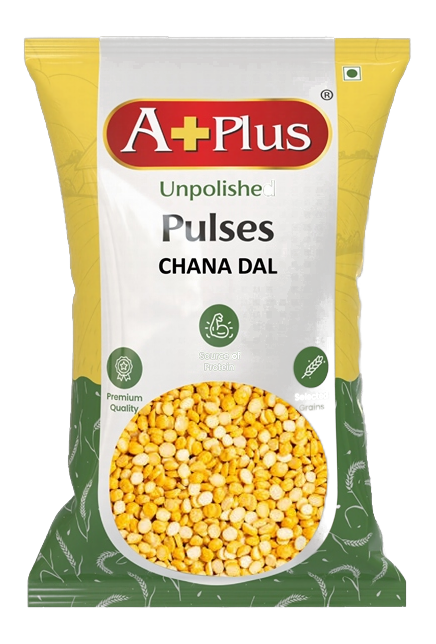
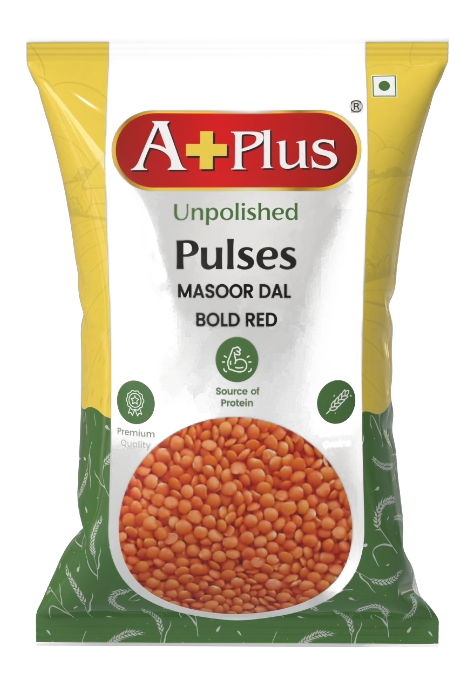
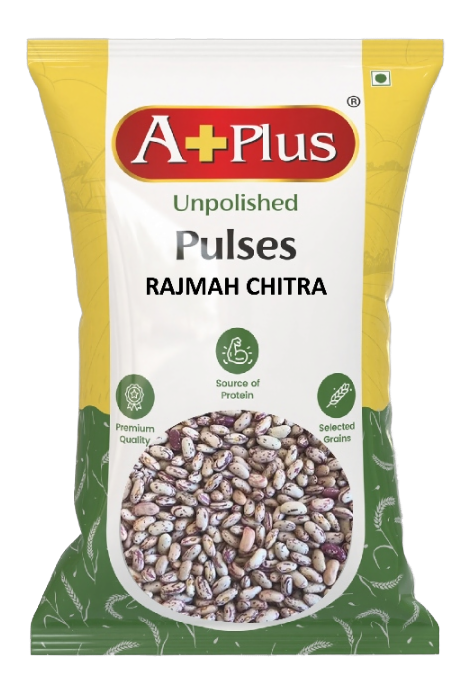
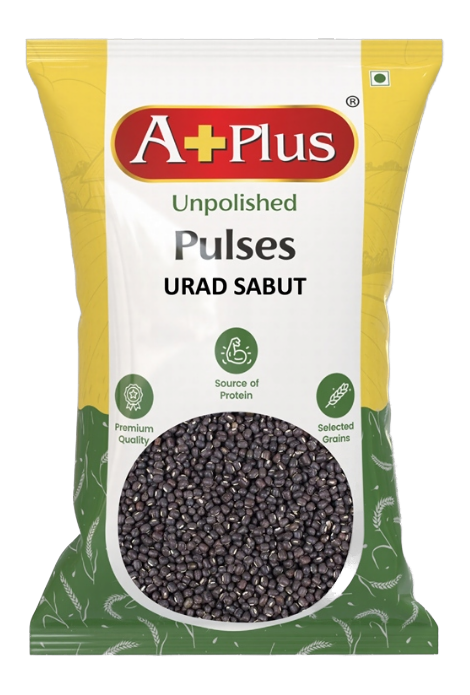
Product images are for illustration only; the actual product and packaging may vary.
Premium pulses, dry fruits and more
Unpolished pulses, honestly graded dry fruits, and single-source spices, milled and packed in Nawanshahr, Punjab. FSSC 22000, US FDA and HACCP certified.
Browse the Shop →